Five buildings and Italo Calvino’s “Six Memos for the Next Millennium” (1, revised)
Lightness: Anthony Browell Magney House, New South Wales, Australia
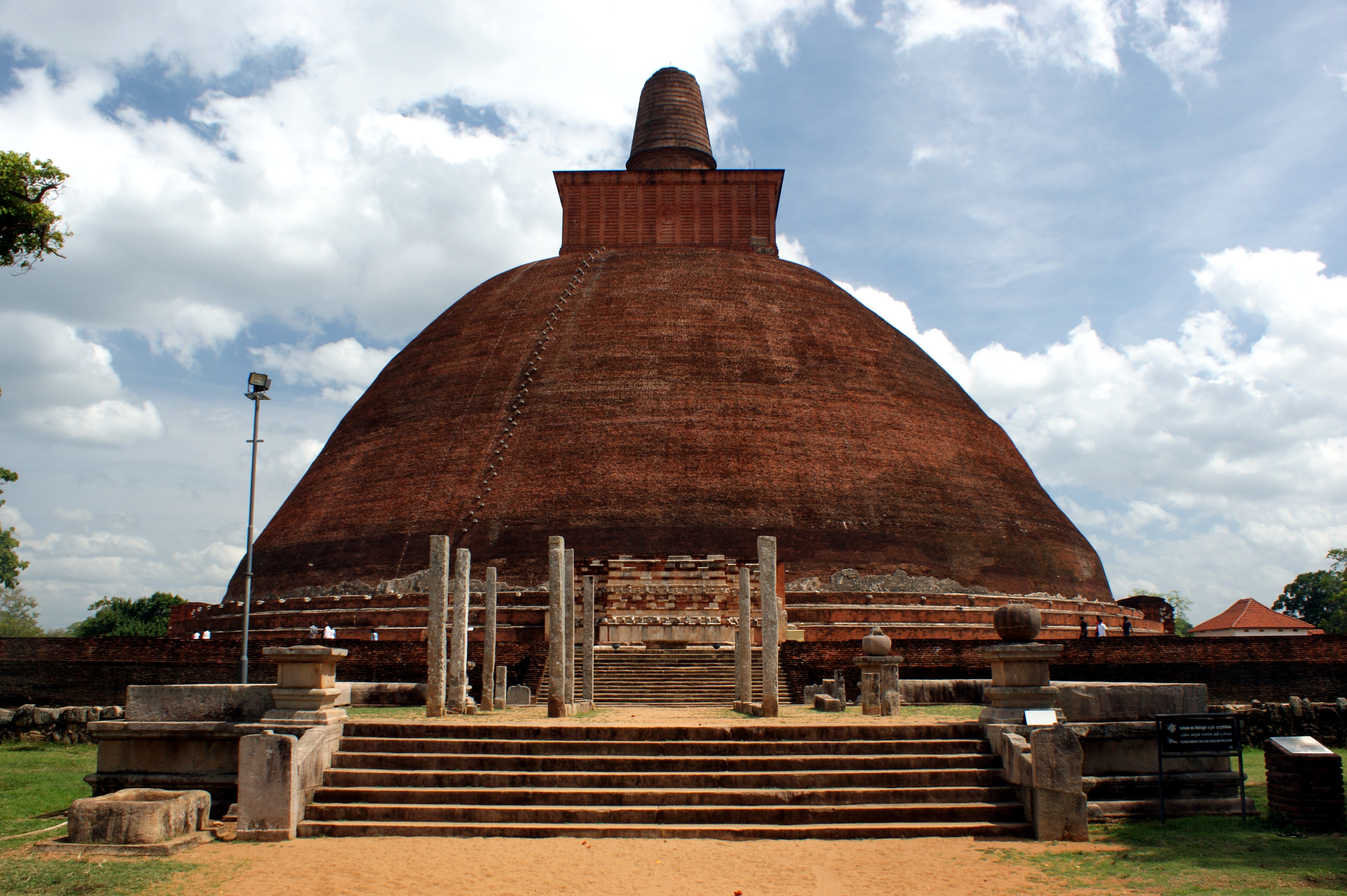
While the mud is nothing more than a bunch of sodden dust, the land as its origin is a full gravity. The dried clay turns into the hardened cuboid, with which people achieved a 122 m tall stupa Jetavanaramaya in Sri Lanka 1700 years ago. Familiarized for its commonplace raw resources, convenient manufacturing process and straightforward building method, the brick is one of the oldest construction materials of human history.
The story of the three little pigs reveals why; their other houses made of straws and sticks are blown away by the simple breath to demonstrate that solidity and durability are crucial for the construction material. In reality, numerous ancient monuments preserved today are mostly made of elements proved for these conditions. Aula Palatina, as known as the Basilica of Constantine, was built with fired bricks around AD 310; in the Colosseum of Rome completed in AD 80, we can easily find the traces of brick arches.
Nonetheless, the durable and substantial achievements couldn’t avoid the damage of war. The Church of St. Columba, named after Saint Columba ([De] Kolumba, 521 – 597), Irish missionary who is credited with introducing Christianity in Scotland, in Cologne (Köln), Germany, was one of the buildings destroyed by a bombardment during World War II. A few outer walls and the pillared nave partly survived. Miraculously remained intact, the statue of the Virgin Mary in the middle of the ruins drew hope of salvation; it shows that the tragedy doesn’t happen only to people. In 2008, after 10 years of preparation, an art museum opened in this place. Next to the entrance, the name “KOLUMBA” only is pegged to the wall that combines the vestige of destruction as a carved relief; endured the biggest warfare, other words should be superfluous.

Furthermore, this building attracts attention with its specifically redesigned brick, twice the length and half the thickness of a regular one, these were handmade in wooden molds and fired in a charcoal kiln by a Danish manufacturer. Due to its dimension, the outer shell shapes the homogeneous texture that resembles a cross section of well-baked mille-feuille. By virtue of that fine grain, the building produces the inexplicable reverence when the new brickwork and burnt Gothic stonework engaged each other. These bricks also create a porous wall that couldn’t be made with short and thick normal ones. Through this wall, the sunlight spreads like butterflies on shiny concrete floors and ceilings; it is the moment of unveiling the laborious efforts of people over the space.
However, other than the unique dimension or the meticulous execution, it is also interesting to see where the brick is employed. Generally used for the external, the brick could differ its predetermined purpose when it locates inside. While the conventional brick veneer construction, traditional masonry wall with internal insulation, is commonly practiced, Australian architects and engineers have created the environmentally significant buildings applying this method reversely. The Magney House on the plains of New South Wales in Australia was also designed in this way.
Hidden and invisible, the masonry wall is inside the insulation layer; bricks thereby not only function as interior finish and structural material, but also serve to buffer the fluctuating thermal energy in the house. In this case, other materials of similar properties, such as concrete or stones, could replace bricks; the brick wall of this building is even covered by storage furniture. The brick was significant and essential to the Kolumba as it should be redesigned; that of the Magney House was merely an option of convenience in construction.
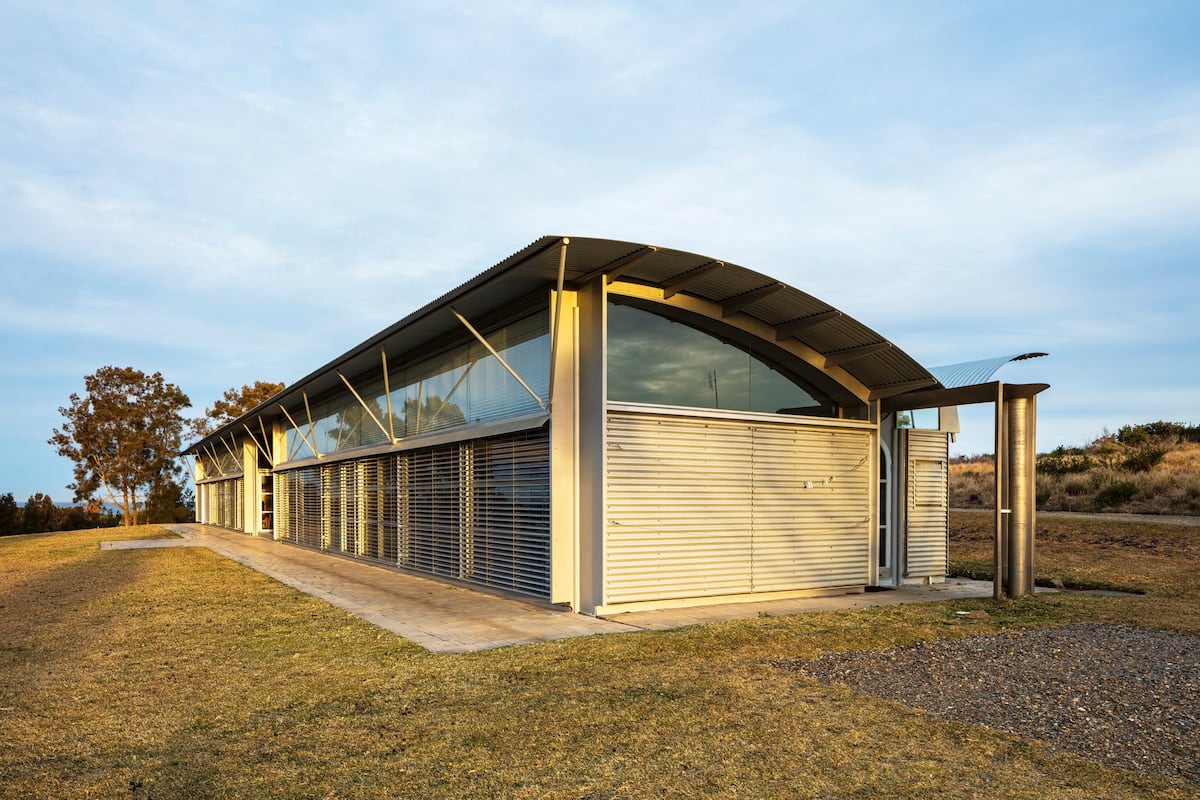
Well known for the 2000 Sydney Olympic Band of the opening ceremony, two types of garment cannot be missed out of the Australian traditional clothing: an impermeable overcoat made of the oiled fabric and a wide-brim fur felt hat. Symbolizing the unique Australian legacy, both were engineered to protect the cattle farmers working in the fields of a downpour and heat. The long waterproof coat covers the rider and the horseback from the rain; the wide-brim hat shades the eyes and the face against the sun. Interestingly, the features of these traditional clothes are also found in the Magney House: extended eaves, expressed large rain gutters, outer finish of uncolored metal panels, and so on.
It is the architect’s choice to respond to the environment in which the house is built, by hiding the everlasting bricks into the walls. It is also the result of the architect’s belief that the building should not oppose the circumstances. Using the same material in an environmentally efficient way, the burdened house comes light in appearance. The titles of some books on this architect who lead a new Australian domus in the form of a long and narrow, light-weight, roof work, comparable in its sheltering function to the bower of a tree or, in more morphological terms, to the turned-up collar of an overcoat that shelters from the wind while subtly opening its front towards the sun*, include the stubbornly prudent aesthetics of lightness: Leaves of Iron, Touch this Earth Lightly, or Feathers of Metal.
* The Pritzker Architecture Prize Essay: The Architecture of Glenn Marcus Murcutt, by Kenneth Frampton

 J-W.H/A+U&D