Five buildings and Italo Calvino’s “Six Memos for the Next Millennium” (5, revised)
Diversity: Anexo del Ayuntamiento de Murcia, Murcia, Spain
Buildings are drawn, constructed and used with predetermined purposes. Houses are created to inhabit, and factories are made to produce. Sometimes a power plant or a railway station is redesigned for another program such as the Tate Modern or the Musée d’Orsay, but those cases are quite exceptional. The encyclopedia tries to include all knowledge of the world; the literary work aspires to reach the truth of the universe. The building always possesses a distinct and practical reason; at the very beginning, it was merely a static tool as a shelter to protect a “fragile” human being from unknown external risks.
However, putting the buildings together one by one on an identical plane, another point of view arises, since they create relationship including equipoise, hierarchy, territory, boundary, homogeneity, heterogeneity, conformity, multiplicity, and so on. This contextual entanglement, called a city, offers a field to observe the meaning of a building, focusing on why people conceive and accept it on that specific location. In other words, the city is a pending outcome of the society, as an enormous architecture that never ends.
The city and the region, the farmland and the forest turn into the human property, because these are “an immense receptacle of labor”, because these are “a work of our hands”; yet artificial and constructed, these are also testimony of the value, continuity and memory. The city is in its own history.*
The City Hall annex of Murcia in southeastern Spain could be a good example to analyze how the building makes a lively dialogue with the circumstances of the city. A single intentionally drawn façade counterbalances the most historic public space of the city with the facing cathedral. This contemporary elevation is clearly heterogeneous to the other sides of the square filled with Baroque ambience of the 16th-century cathedral and the 18th-century cardinal’s mansion.
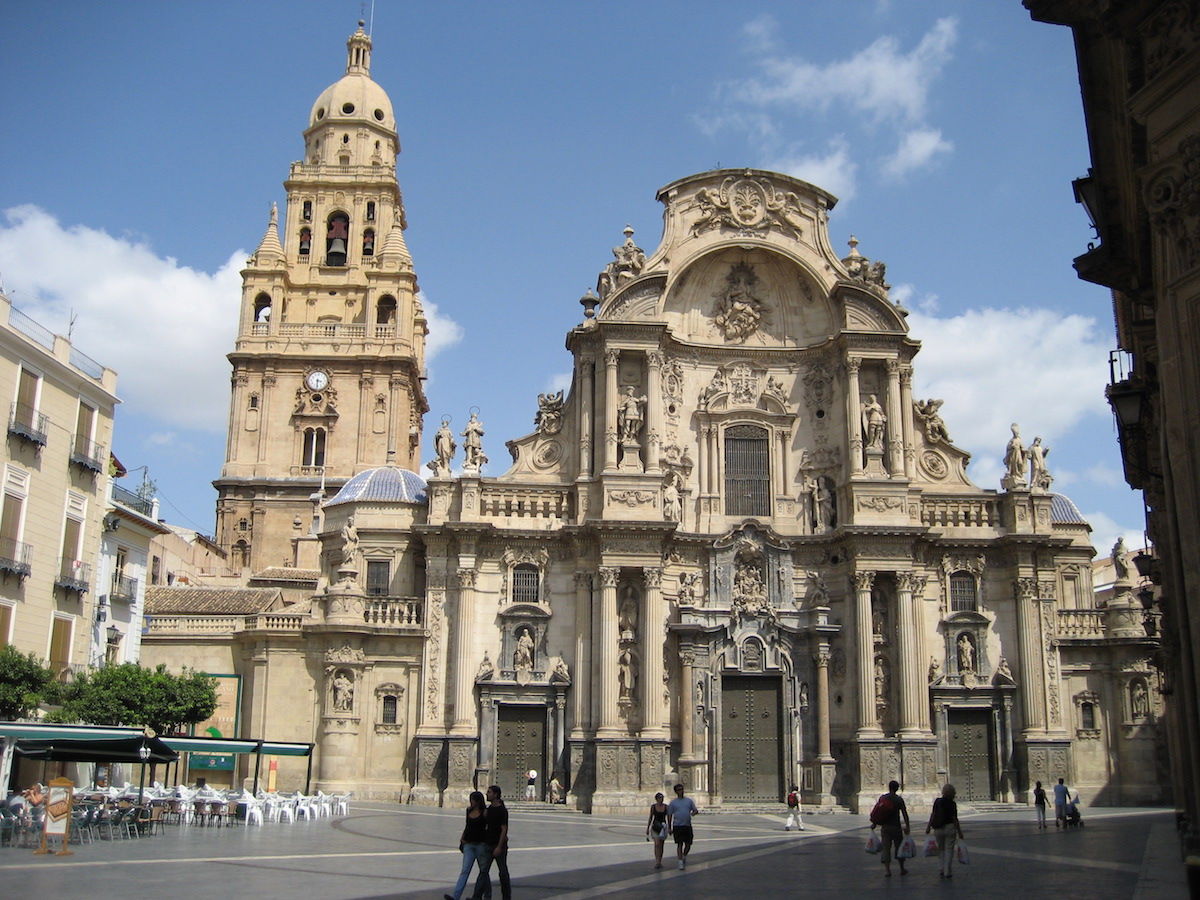
Once there was a building, Palacio Doctoral de la Riva, built in 1797, on that side of the square. It had placed lower and shaped smaller, since a three-story residence is too humble to share the table with the cathedral and its brotherhood, contenting itself with ensuring the boundary of the religious territory against the city hall on its back. Reached the end of its life due to the severe structural problem, the property was demolished in 1973. Spain was still under Francoism, the church retained power, the site stayed untouched.
Hence, it was so obvious that the PSOE held the council of the city after the demise of tyranny; it was also predictable that the PSOE authority would plan something on that untouched empty site right behind the city hall. The PSOE has kept the administration until 1995 with 4 mayors in a row; in this period, the council mapped out there a city hall annex as part of the old town renewal projects. The first attempt, in 1986, has unfortunately failed; a radical design with the curtain wall façade of Alberto Noguerol and Pilar Diez couldn’t match the outcry.
Hence, it was so obvious that the PSOE held the council of the city after the demise of tyranny; it was also predictable that the PSOE authority would plan something on that untouched empty site right behind the city hall. The PSOE has kept the administration until 1995 with 4 mayors in a row; in this period, the council mapped out there a city hall annex as part of the old town renewal projects. The first attempt, in 1986, has unfortunately failed; a radical design with the curtain wall façade of Alberto Noguerol and Pilar Diez couldn’t match the outcry.
It should be underlined that, in other European cities, the old town is particularly protected and conserved. Furthermore, the square is a testimony of the history. In spite of continuing conflicts, the council didn’t give up; few years later, the project resumed with softer approach but still in contemporary language. The second attempt was skilled; according to the architect, the modernity of the building interprets the rhythm composed by balconies and windows of those long-standing neighbors. The construction has finally started in 1995, the last year of the last PSOE mayor.
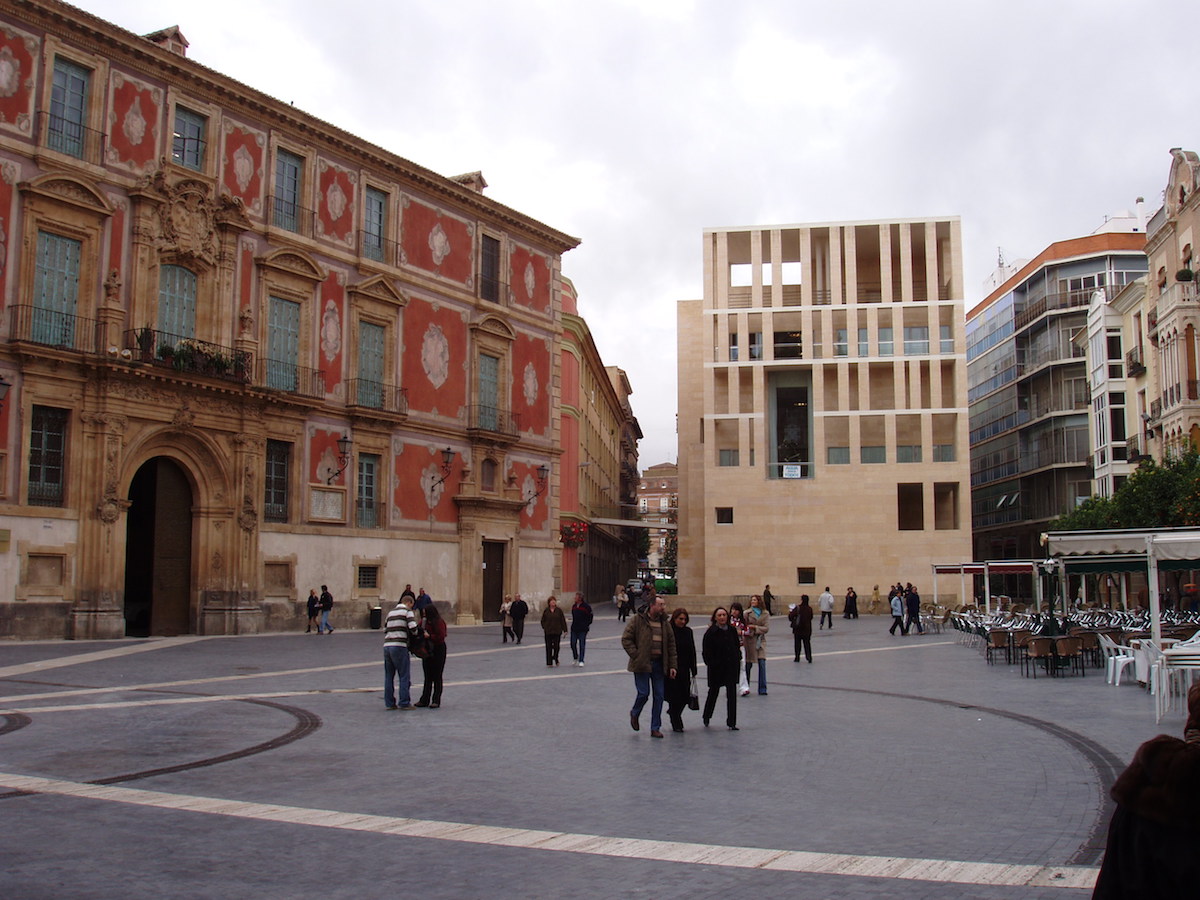
Why the council, elected by the citizen, has tried to put a bold modernity in the middle of the distinguished religious territory? The answer is the building itself, as a step of the citizenry discreetly taken on the front yard of the religion and as a footstone of the civil authority that enters where worldly power of the church receded; it implies the modern history of the City through the Spanish Civil War and 36 years of despotism.
With its elders, this building offers the rare appearance that isn’t common in other cities of the similar context; if it is placed anywhere else among the up-to-date constructions, it couldn’t have that kind of representation. The city thereafter acquired a unique diversity, not by dominantly disregarding the surroundings but by inherently symbolizing the social and historic values. The building could wear more conventional and traditional appearance following the composition of its neighbors; by not doing so, derived from political intention of the council or personal desire of the architect, the multiplicity has settled on this square. The grand window engraved the crest of the city that mirrors the spire of the cathedral proves that.
* L’architecture de la ville, Aldo Rossi, Edition Infolio, 2001, ISBN 2-88474-500-9

 J-W.H/A+U&D