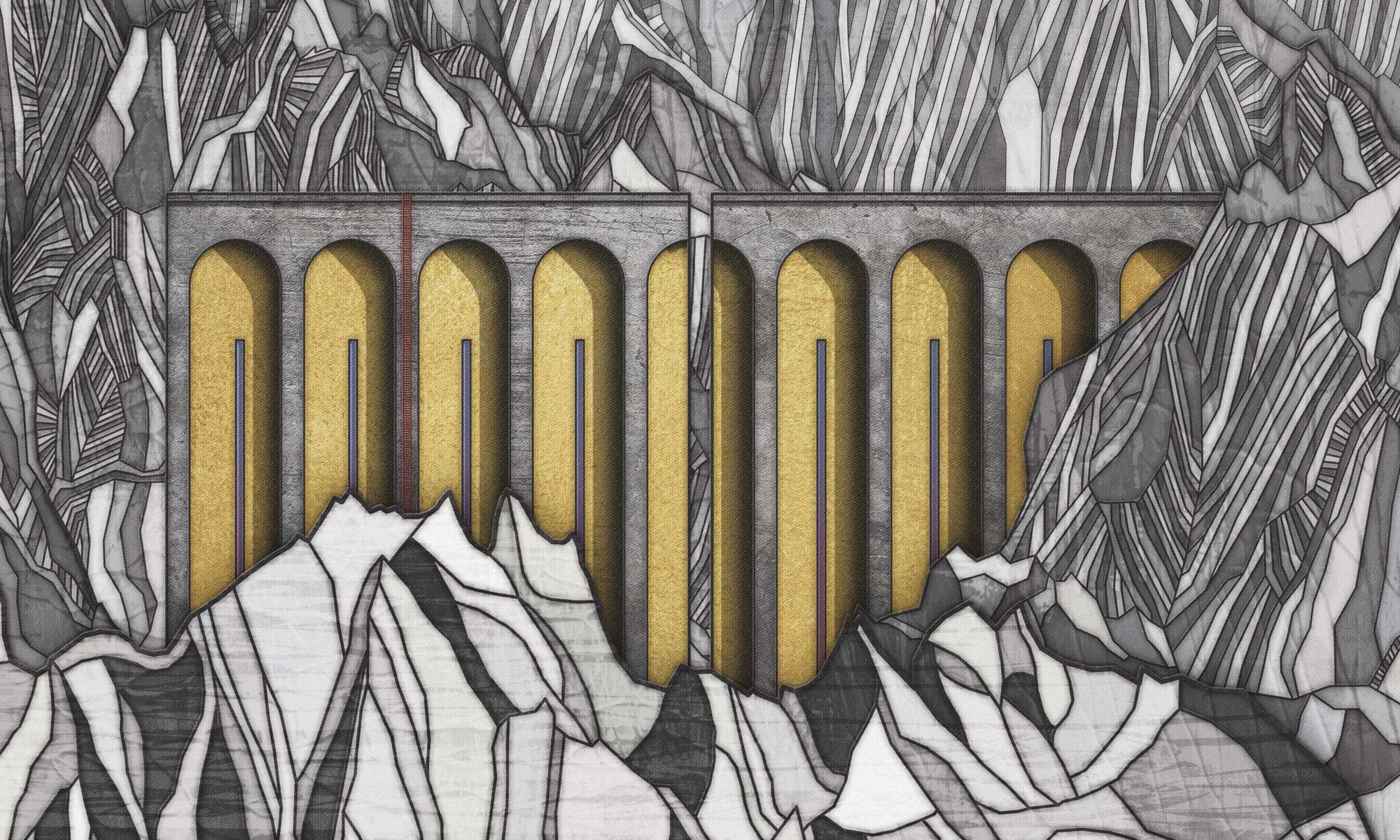
Five buildings and Italo Calvino’s “Six Memos for the Next Millennium” (6, revised)
Prada Marfa, Valentine, Texas, United States
The Prada boutique of Marfa shows seriously concerned details for its small size; it was the owner of the brand in person who selected the articles to display. Due to its location, just off the borderless highway, it has suffered for vandalism and robbery; every time that happened, the Ballroom Marfa, a local nonprofit organization paid for repairs.
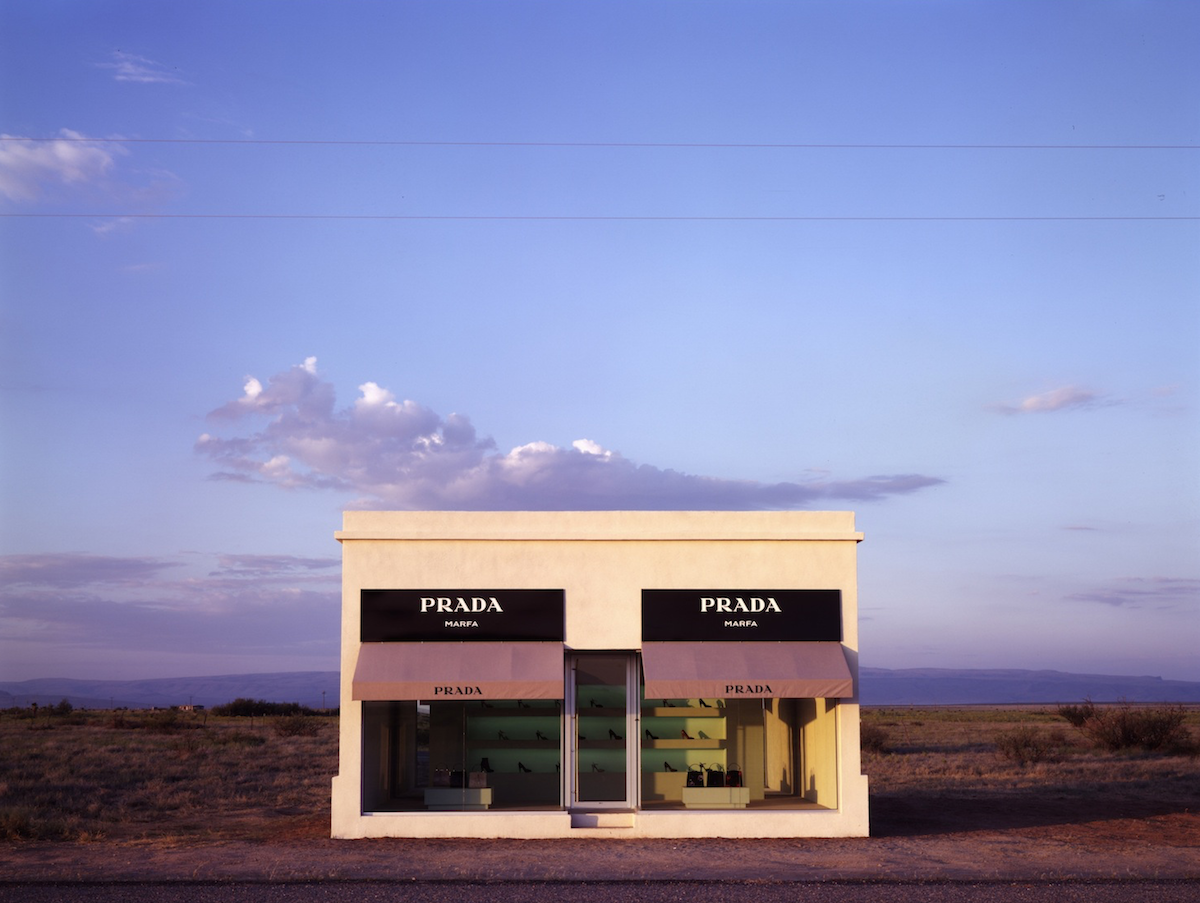
In brief, this is not a building. It’s an installation art to show how it wears off gradually in rain and in wind of Texas over time, designed by two creators supported by this organization. The appearance is almost same as the real, but it’s never opened for business. Functionally useless, however, one might recall the absurdity of consumption or meaninglessness of existence through this mimic on the wasteland.
The installation and surroundings also constitute a picture that dramatically reveals the relationship between buildings and places. “That couldn’t be here.” “No such shop there.” The unexpected location helps people see this store as a fake; it is possible that the creators chose the brand to draw that kind of assumption.
Consistency could be a conclusion of the story. Actually, every building has all previously observed features: lightness, quickness, exactitude, visibility, and multiplicity; certain of them are just more perceptible in a building. For example, it’s not difficult to find the lightness in the annex of the city hall of Murcia. Facing the solemn ritual of the cathedral, the building or rhythmic articulation is definitely light. At night, the Philharmonic Hall in Szczecin unveils its multiplicity with illuminated white glass wall in the middle of rigorous old town.
The most important value in common is that those buildings consistently consider the significance of spatial circumstances. Vast plains, ruins, deep valleys, old towns, or historic squares, in each place the construction fits environmentally, historically, technically, archetypally, or symbolically, as a harmonious picture.
According to the French National Institute of Statistics and Economic Studies (Institut national de la statistique et des études économiques, INSEE), 77.5% of the population lives in urbanized area that accounts for only 22% of French territory.* It may be a good idea to develop the new garden towns, but it is also necessary to rectify the current city. It is obvious that the vicious market logic could easily disregard the fragile environmental sustainability; this is why we need consistent and severe correction to our long-standing mistakes.
* Tableau de l’Economie française édition 2012, INSEE, 2012 Paris, pp.16

 J-W.H/A+U&D