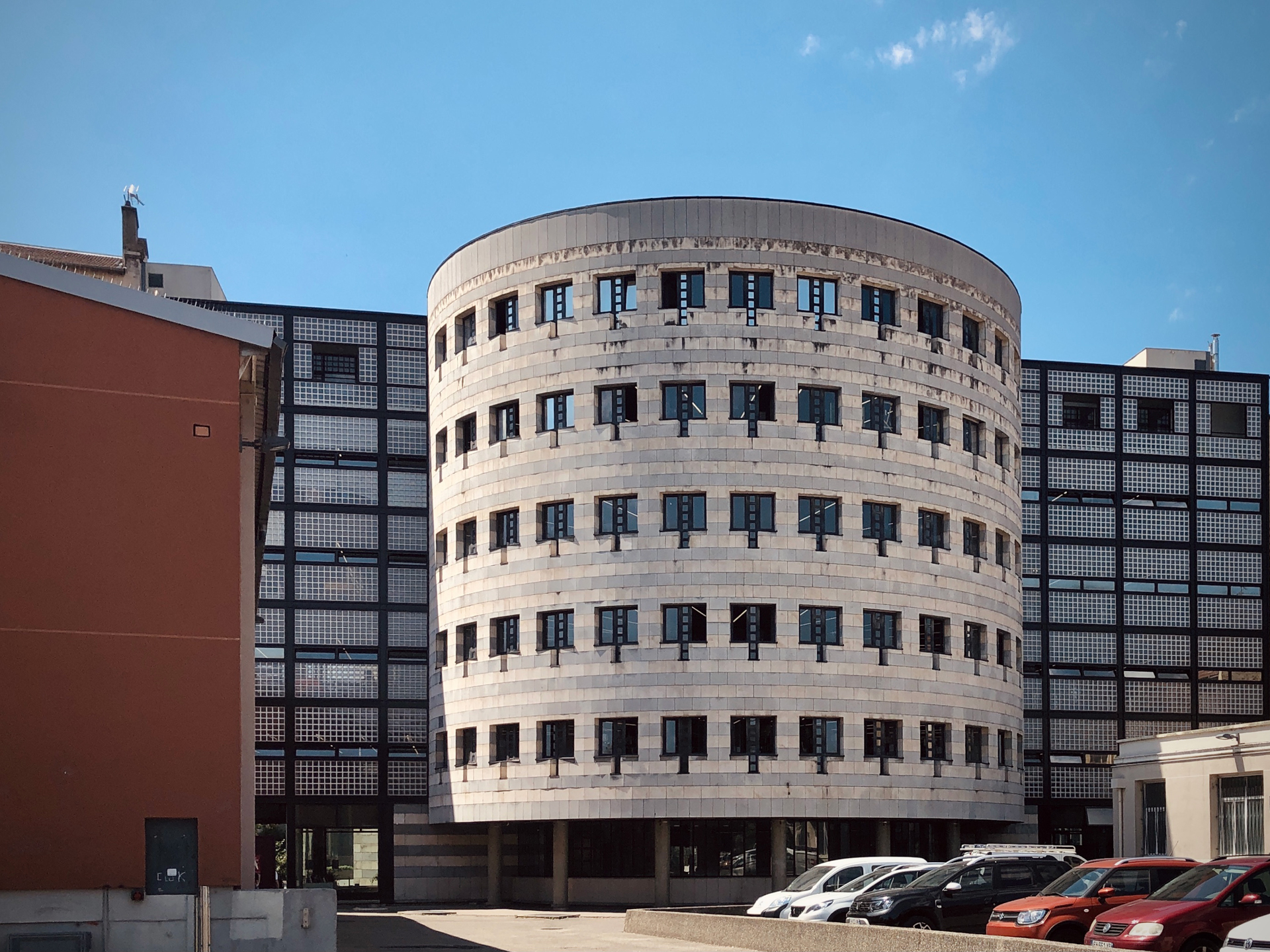
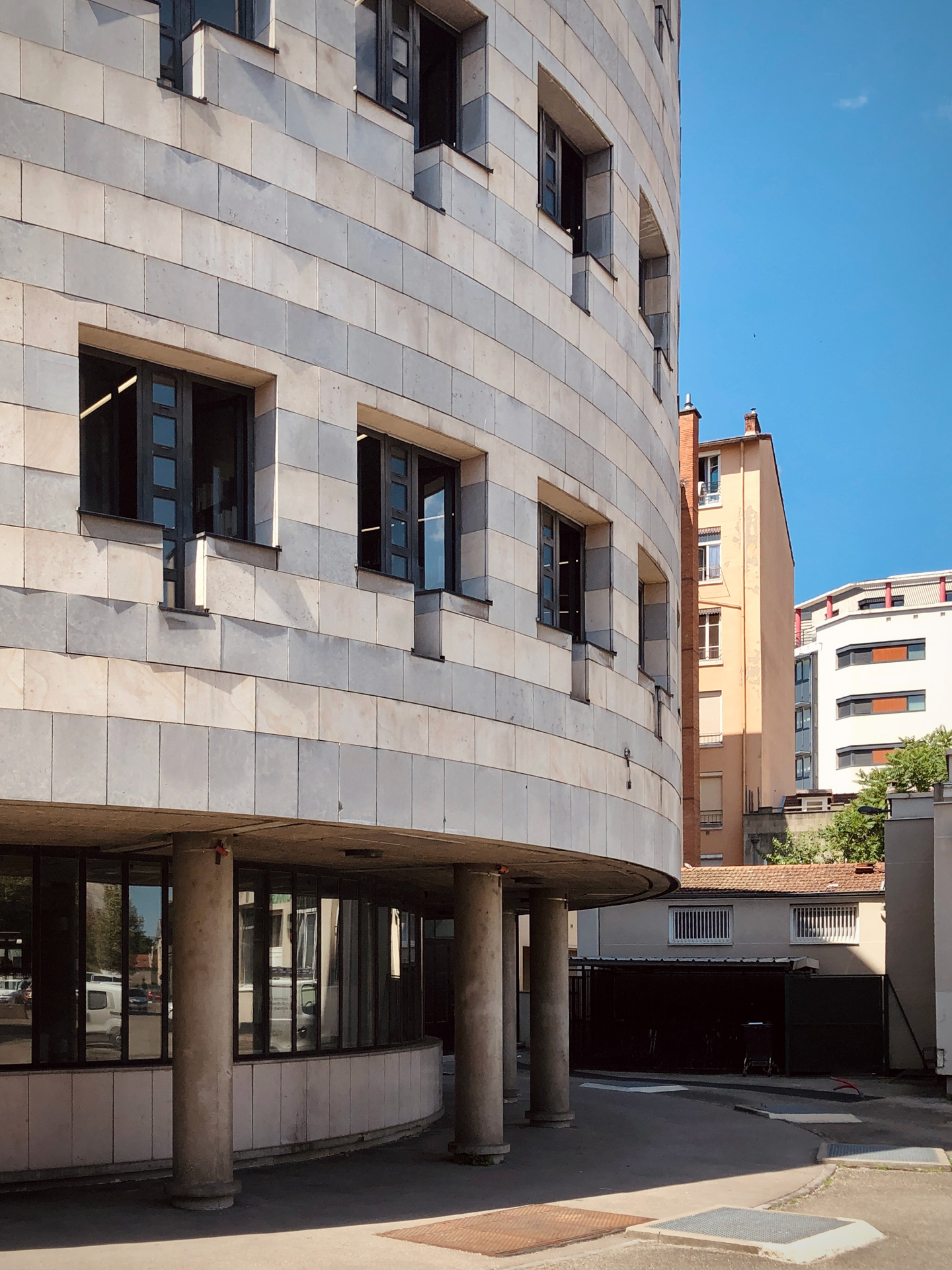
MARIO BOTTA IS a Swiss architect who has designed several buildings in my hometown, Seoul. As far as I remember, there was a brick tower near my home; its red brickwork was remarkable, in the middle of the achromatic vertical forest. As the architect intended, it is truly an urban landmark in one of the most densely built-up areas of the city. After a while, I discovered his other project in Villeurbanne, a satellite town of Lyon; it’s the Maison du livre, de l’image et du son François Mitterrand, which is part of the Médiathèque de Villeurbanne.
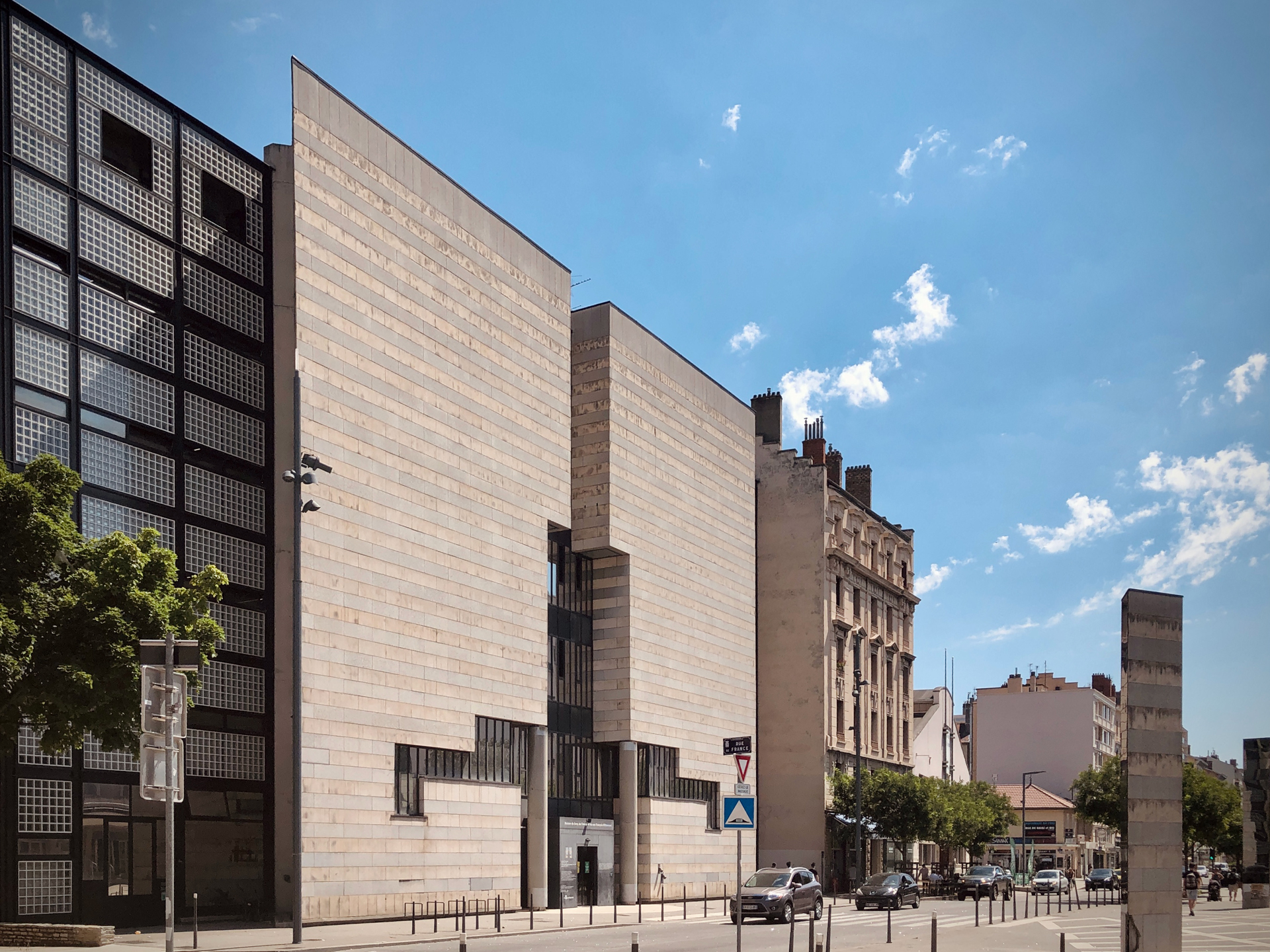
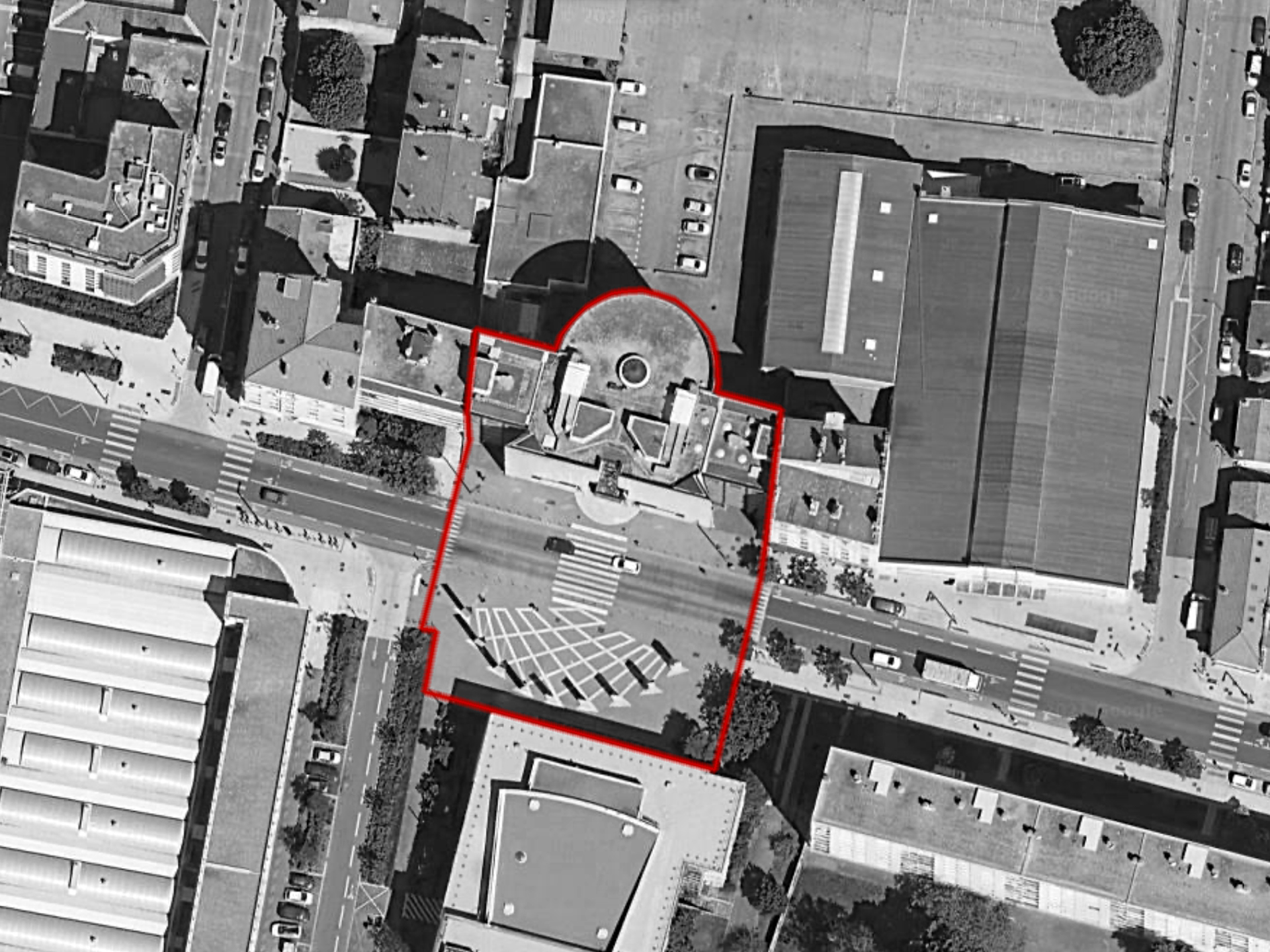
To expose its identity with the carefully designed facade, the building must have its open space set before the main entrance, as the Pompidou Center requires the spacious square to present its sophisticated facade in its entirety. However, there is a problem; the building faces a busy 2-lane road with narrow pavement each side. That’s why, on the opposite side, an open space occupying similar footprint of the building is landscaped with the lines on the ground that join the crosswalk before the main entrance. What a brilliant idea!

MARIO BOTTA EST un architecte suisse qui a conçu plusieurs bâtiments dans ma ville natale, Séoul. Autant que je m’en souvienne, il y avait une tour en briques près de chez moi ; sa maçonnerie de briques rouges était remarquable, au milieu de la forêt verticale achromatique. Comme l’architecte l’avait voulu, c’est vraiment un repère urbain dans l’un des quartiers les plus densément construits de la ville. Après un certain temps, j’ai découvert son autre projet à Villeurbanne, une commune voisine de Lyon ; il s’agit de la Maison du livre, de l’image et du son François Mitterrand, qui fait partie de la Médiathèque de Villeurbanne.
Afin d’exposer son identité avec sa façade soigneusement dessinée, le bâtiment devait avoir son espace libre devant son entrée principale, comme le Centre Pompidou a exigé une vaste esplanade pour présenter sa façade sophistiquée dans son intégralité. Cependant, il y a un problème ; le bâtiment fait face à une route à deux voies très fréquentée, avec un trottoir étroit. C’est pourquoi, sur le côté opposé, un espace ouvert occupant une surface au sol similaire à celle du bâtiment est aménagé avec les lignes au sol qui rejoignent le passage piéton devant l’entrée principale. Quelle idée géniale !

 J-W.H/A+U&D