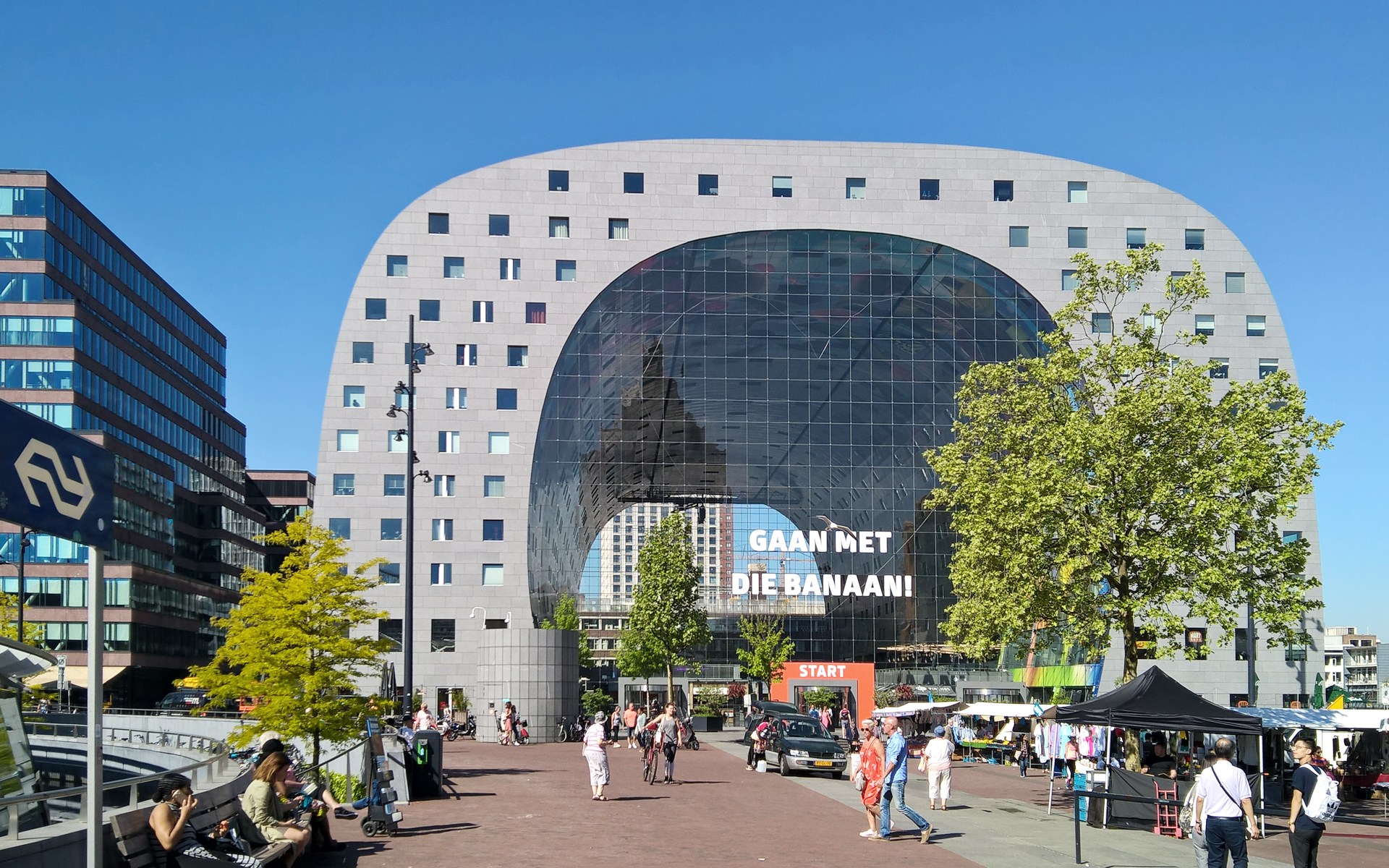

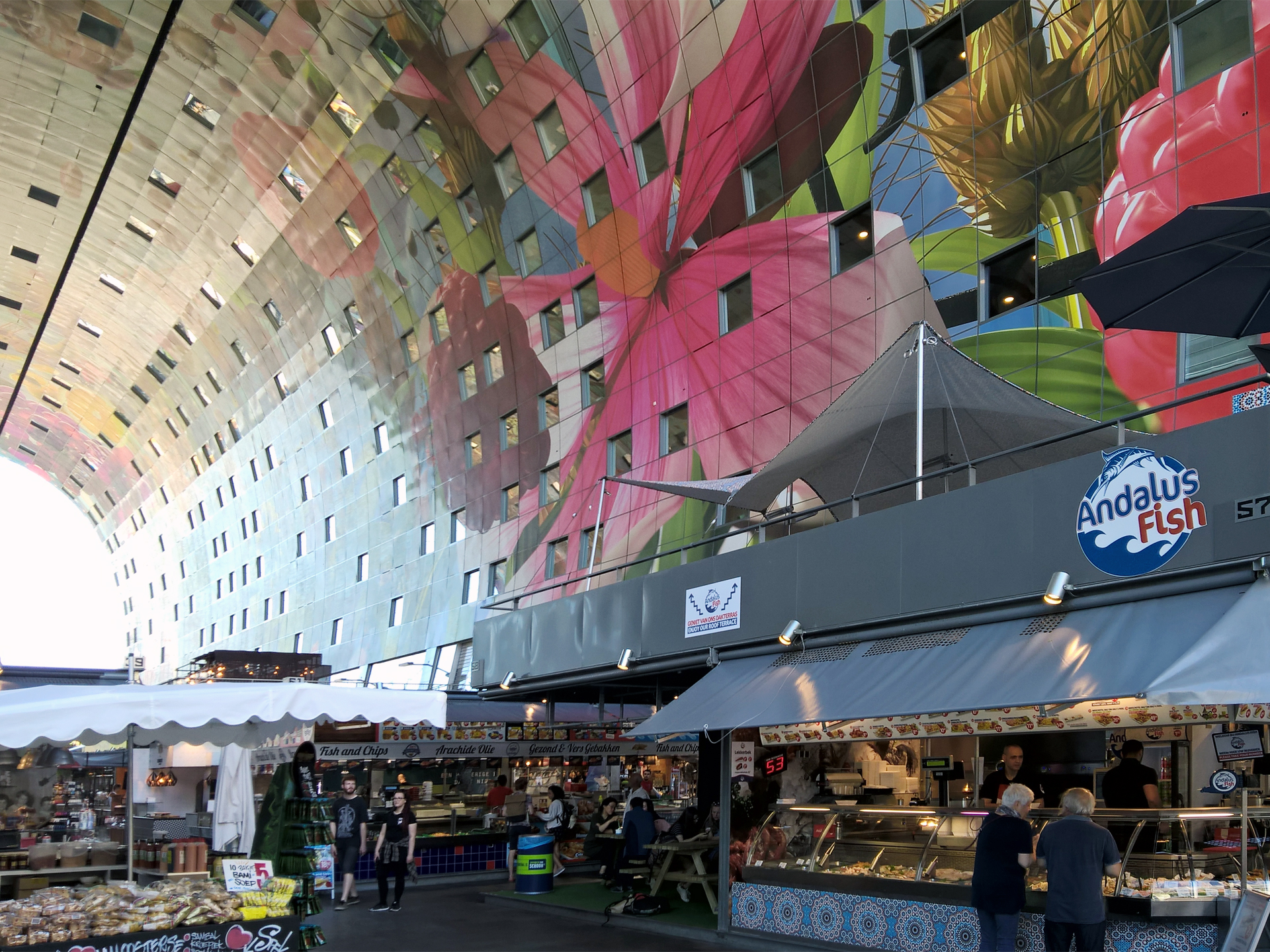
Rotterdam is a city of architecture in its aesthetic excellence beyond practical feasibility; the Markthal, a combination of multi-family housing and covered market built in 2014 in the center of the city, would be a good example to observe a Dutch shift in architectural ideas. I went there to buy fresh stroopwafel, a Dutch classic, and the building was amazing. In fact, its arch-wise structure, which resembles a kind of wagon cover in western movies, comes from two housing entities sharing a roof; the gable ends of the housing entities create the entrances of the walk-through market. It looks simple, but the architect overcame several technical challenges, such as:
- The glass walls of the entrances are composed by 148,5 cm x 148,5 cm windows hung around the steel cable structure similar to a tennis racket. It is the largest glass-window cable structure in Europe with 26 vertical and 22 horizontal cables allowing 70 cm of deflection for extreme wind loads.
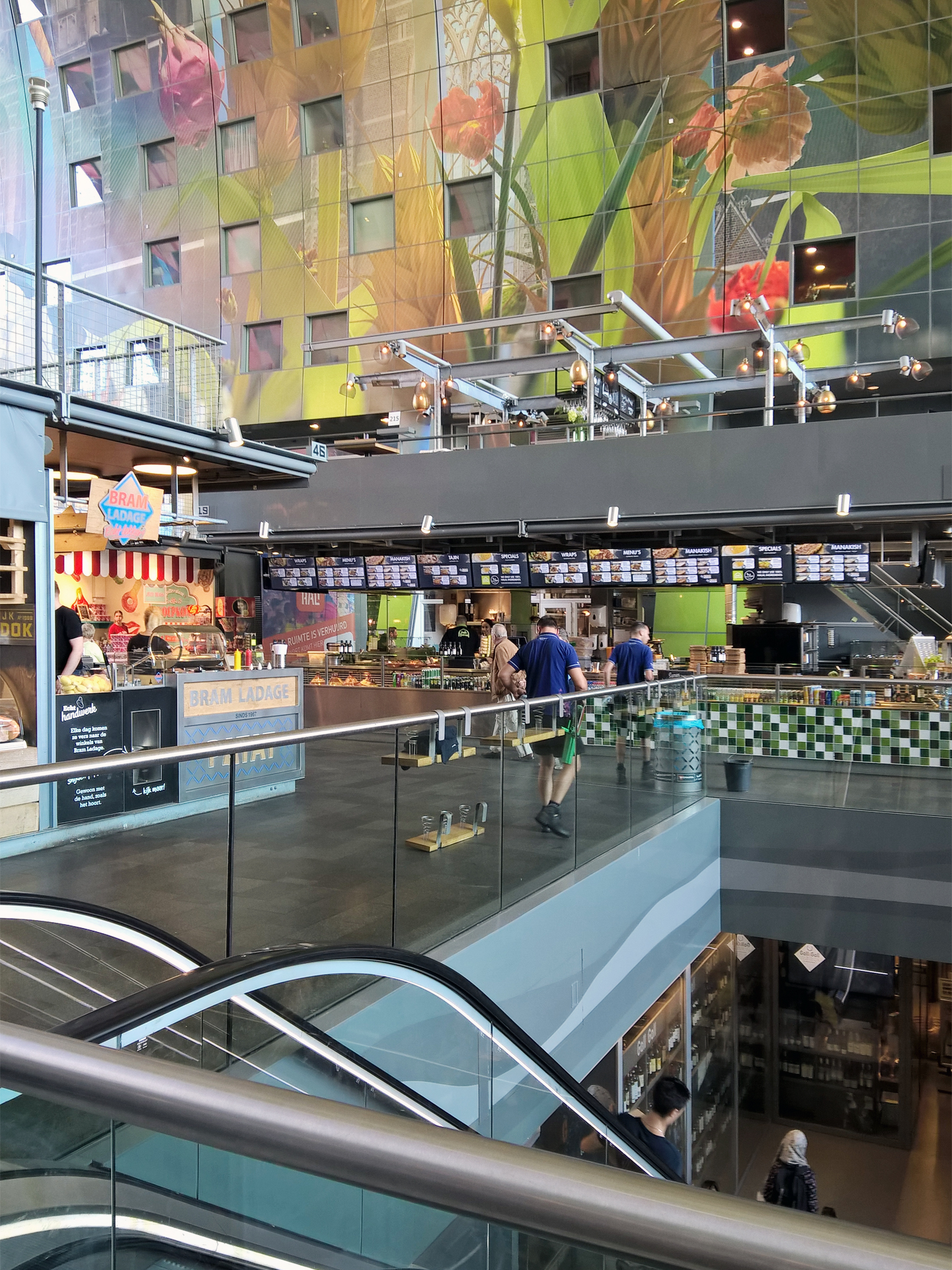
- The inner wall painting is created by Arno Coenen and Iris Roskam. The original painting, a 1.47 terabytes digital file rendered by Pixar software, is separated and printed on 4,000 perforated aluminum panels.
- The apartments have windows to the market. Mostly kitchens, dining rooms and storage are positioned on the market side, and the sound and smell proof triple-layer glasses are used for the windows.
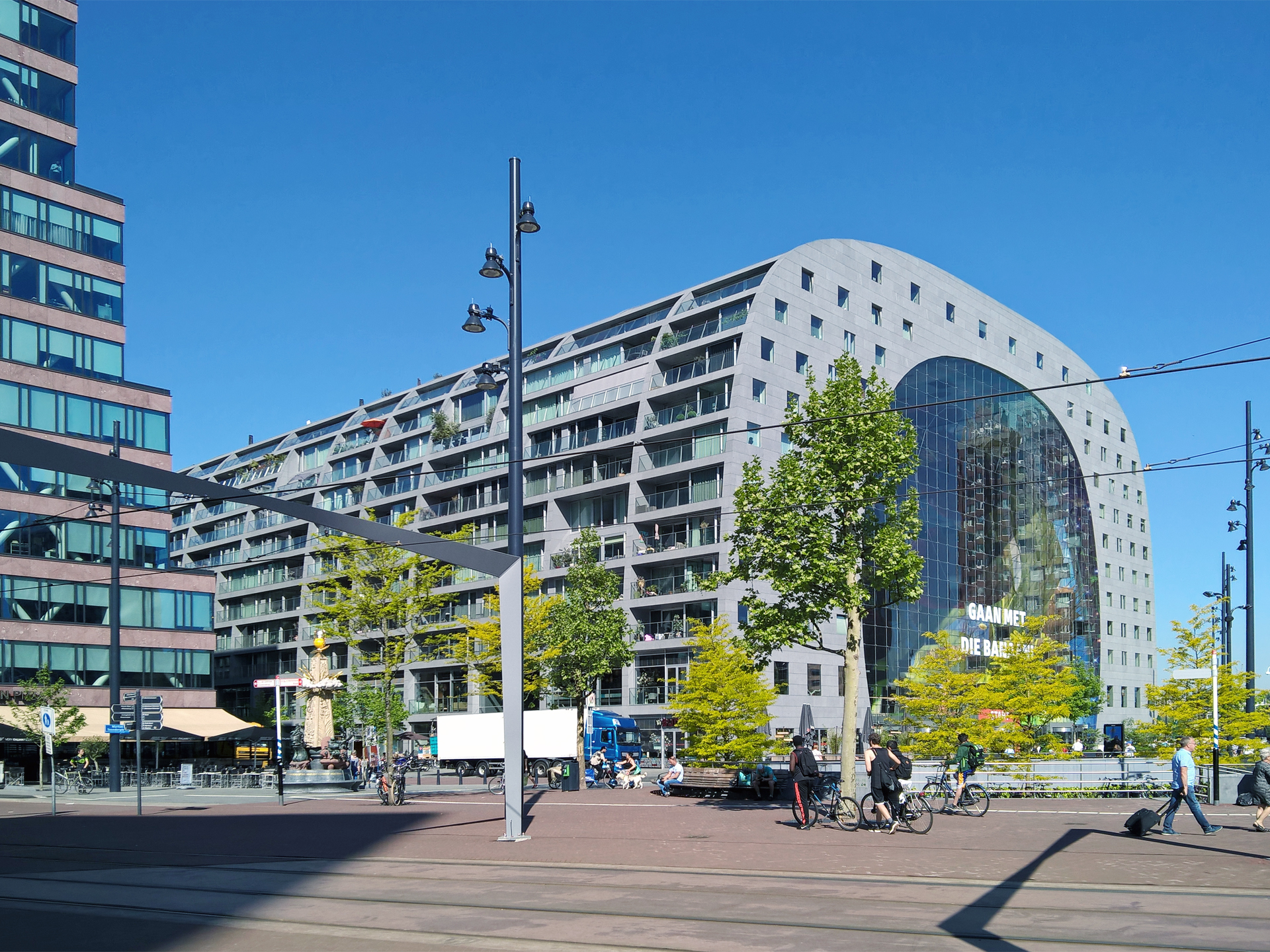
Rotterdam est une ville de l’architecture dans son excellence esthétique au-delà de la faisabilité pratique ; le Markthal, une combinaison de logements collectifs et de marché couvert construit en 2014 au centre de la ville, serait un bon exemple pour observer une réinvention néerlandaise des idées architecturales. J’y suis allé pour acheter des stroopwafel frais, un classique néerlandais, et le bâtiment était étonnant. En effet, sa structure en forme d’arc, qui ressemble à une sorte de couverture de wagon dans les films de western, provient de deux entités d’habitation qui partagent un toit ; les murs de pignon des entités d’habitation constituent les entrées du marché traversant. Cela a l’air simple, mais l’architecte a surmonté plusieurs défis techniques, par exemple :
- Les parois en verre des entrées sont composées de vitres de 148,5 cm x 148,5 cm accrochées autour de la structure en câble d’acier, ressemblant à une raquette de tennis. Il s’agit de la plus grande structure à câbles pour vitrage en Europe, avec 26 câbles verticaux et 22 câbles horizontaux permettant une déflexion de 70 cm pour les charges de vent extrêmes.
- La peinture murale intérieure est créée par Arno Coenen et Iris Roskam. La peinture originale, un fichier numérique de 1,47 téraoctet rendu par un logiciel Pixar, est séparée et imprimée sur 4 000 panneaux d’aluminium perforés.
- Les appartements ont des fenêtres donnant sur le marché. Principalement, les cuisines, les salles à manger et les rangements sont positionnés du côté du marché, et des verres à triple vitrage insonorisés et anti-odeurs sont utilisés pour les fenêtres.

 J-W.H/A+U&D