A city for an architect, its splendor veils his belief; a grid from an engineer, his vision shades its autocracy. They run with us, they’re never among us; autonomy fades the stripes, for which a specter haunts. Monument, achievement, heritage and uniform came as symmetry. Mirrors reflect the diagonal where people walk; once tasty, the shoreline draws them to take a rest and pains. The square to parade, the premature crown climbs on boots; desperately winged, the torch breaks through the sky where no cloud is allowed; hateful, though the fight finished.
… As far as the eyes could reach, no one has perceived more than the slaughter houses, the enclosing walls and a few rare facades of the factories alongside the barracks and the monasteries; wherever stood the hovels and the rubbish of old walls blackened as cerecloth, of latest walls whitened as winding sheets; everywhere erected the parallel rows of trees, the aligned buildings and the flat constructions of the bleak long line and of the gloomy sadness of right angles. No heterogeneity on the tissue, no caprice of architecture, no crease. It was glacial, regular and hideous landscape. Nothing represses the heart like symmetry. Symmetry is ennui; ennui founds anguish. Despair bores. Imagine something more terrible than hell in which everyone suffers; it’s in that hell where one would be tedious. If such hell existed, a bit of the Boulevard de l’Hopital might have been its avenue.
The gargoyle of medieval European Gothic architecture, commonly known for the appearance of frightening creatures, has two jobs. While it handles the rainwater from the roof, it reminds people the spiritual danger. The name gargoyle is etymologically originated from the Latin “GORGE”, which refers to the throat, and from the ancient Greek “γαργαρίζειν”, which indicates gargling. Meanwhile, where the eyes rarely reach, the drain has a practically functional shape without wearing a cumbersome sculpture*; it means that the symbolic role of the gargoyle is definitely for those who see it. Hence, the object signifies and appears differently according to where it is placed, even for the same duty.
Five buildings and Italo Calvino’s “Six Memos for the Next Millennium” (6, revised)
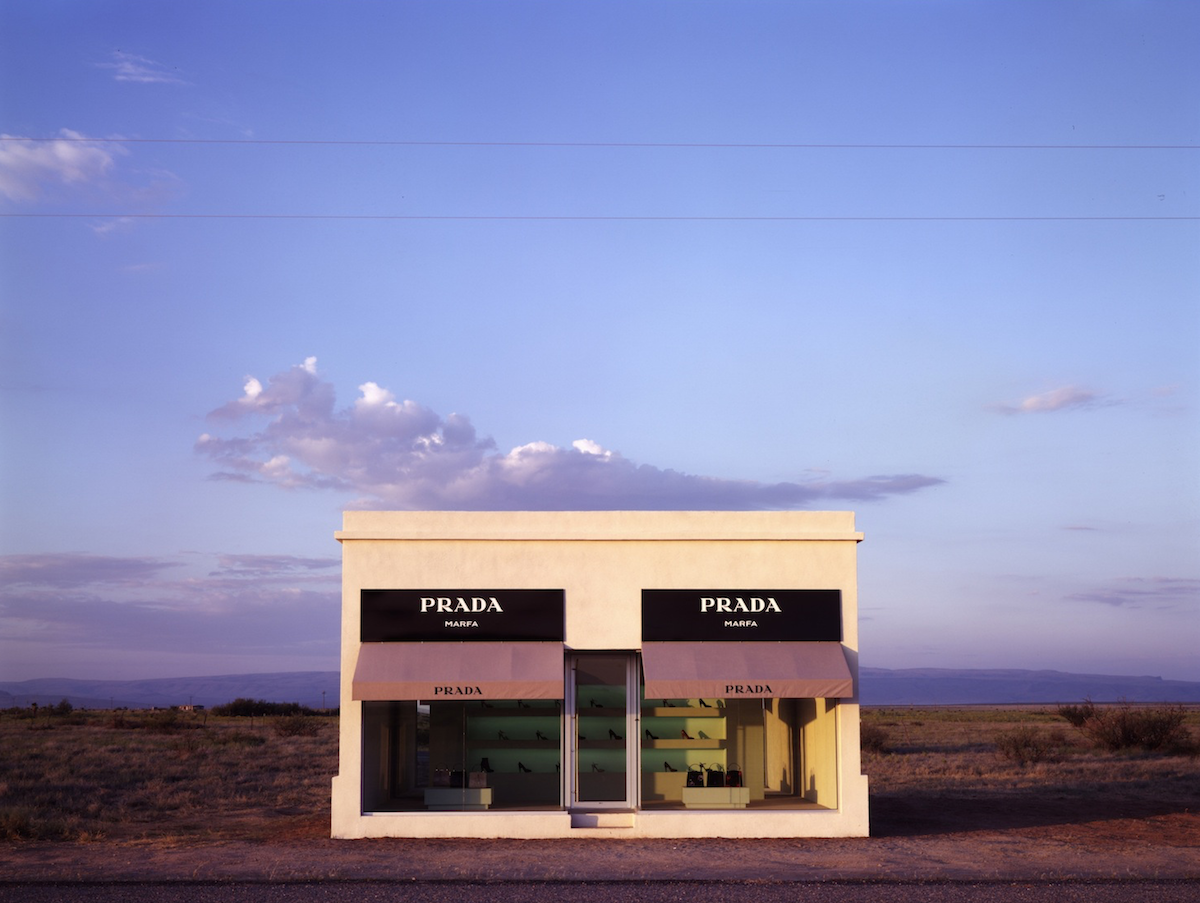
Prada Marfa, Valentine, Texas, United States
The Prada boutique of Marfa shows seriously concerned details for its small size; it was the owner of the brand in person who selected the articles to display. Due to its location, just off the borderless highway, it has suffered for vandalism and robbery; every time that happened, the Ballroom Marfa, a local nonprofit organization paid for repairs.
Prada Marfa (source: ballroommarfa.org)
In brief, this is not a building. It’s an installation art to show how it wears off gradually in rain and in wind of Texas over time, designed by two creators supported by this organization. The appearance is almost same as the real, but it’s never opened for business. Functionally useless, however, one might recall the absurdity of consumption or meaninglessness of existence through this mimic on the wasteland.
Five buildings and Italo Calvino’s “Six Memos for the Next Millennium” (5, revised)
Diversity: Anexo del Ayuntamiento de Murcia, Murcia, Spain
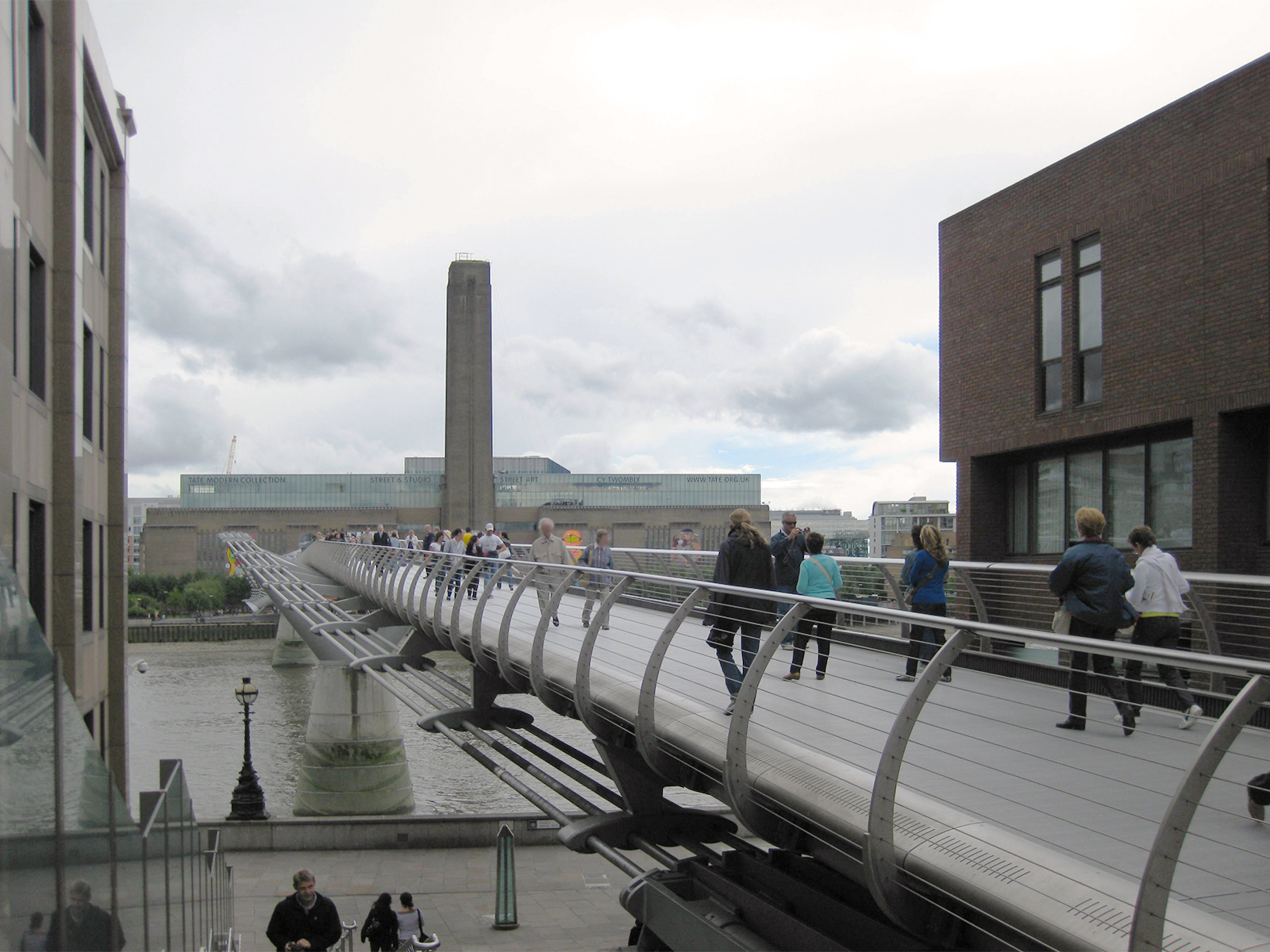
Buildings are drawn, constructed and used with predetermined purposes. Houses are created to inhabit, and factories are made to produce. Sometimes a power plant or a railway station is redesigned for another program such as the Tate Modern or the Musée d’Orsay, but those cases are quite exceptional. The encyclopedia tries to include all knowledge of the world; the literary work aspires to reach the truth of the universe. The building always possesses a distinct and practical reason; at the very beginning, it was merely a static tool as a shelter to protect a “fragile” human being from unknown external risks.
However, putting the buildings together one by one on an identical plane, another point of view arises, since they create relationship including equipoise, hierarchy, territory, boundary, homogeneity, heterogeneity, conformity, multiplicity, and so on. This contextual entanglement, called a city, offers a field to observe the meaning of a building, focusing on why people conceive and accept it on that specific location. In other words, the city is a pending outcome of the society, as an enormous architecture that never ends.

 J-W.H/A+U&D