Row House in Sumiyoshi – 1/100 paper model

DESIGNED BY Tadao Ando and completed in Osaks, 1976, the Row House in Sumiyoshi is known for its minimalist expression without exterior windows. 
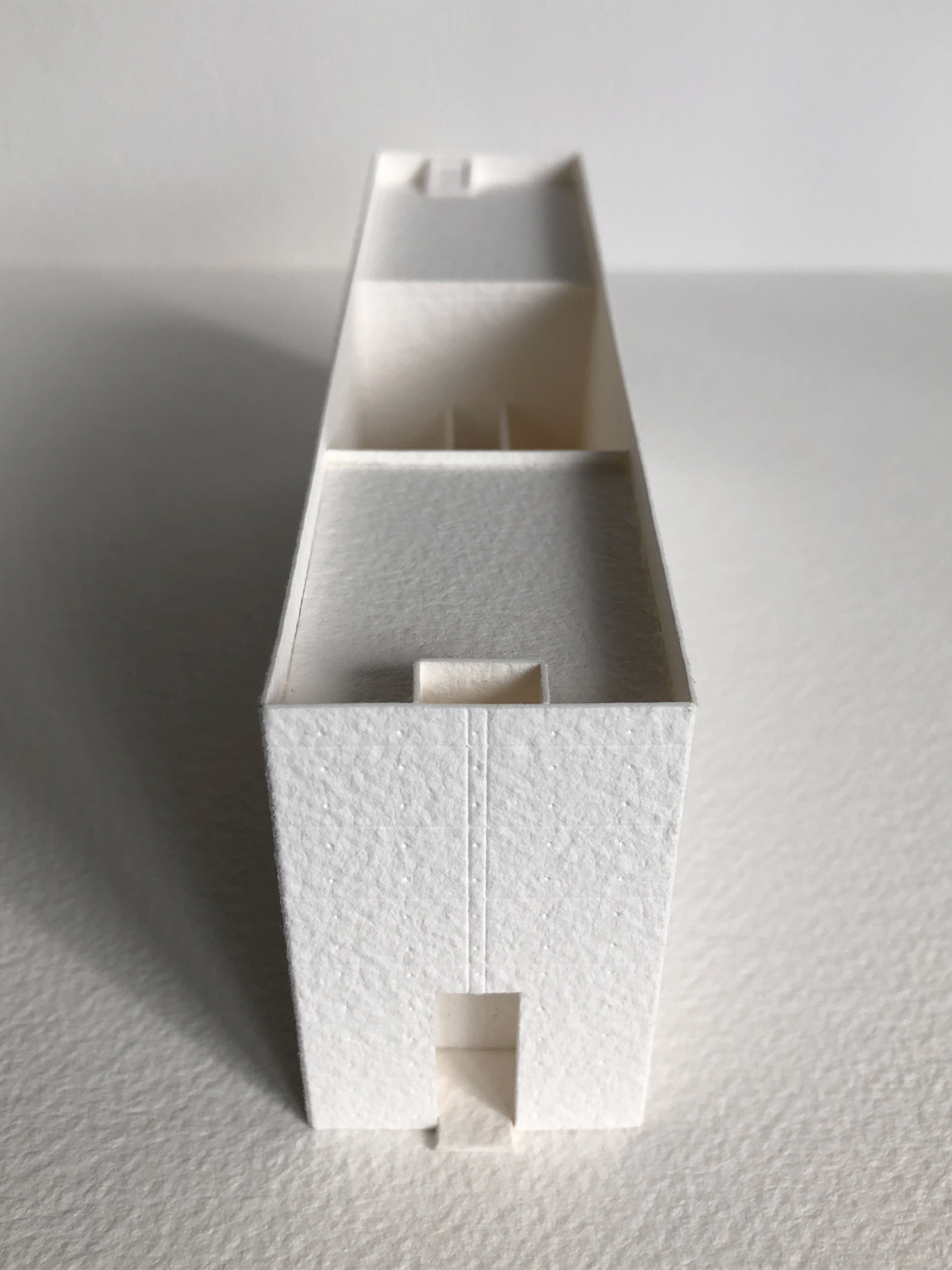
Front-Top view ©J-W.HWANG

I once mentioned a book that Tadao Ando edited; he led his laboratory at the University of Tokyo to build the paper models of Le Corbusier’s 106 houses. Why such a project? He concluded, “I hope they (young students) can learn as much from the architect’s life as from his architecture.” I am no longer a young student, but I am still learning from his life by making a model of his first house.

I used the cylinder-mould made watercolor paper; it’s a little stiff, but perfect for cutting, folding, and gluing to the edge. Plus, it has a particular grain that makes the gradation between light and shadow more interesting. 

©J-W.HWANG
More / Version française

Reengineered Room in London, UK

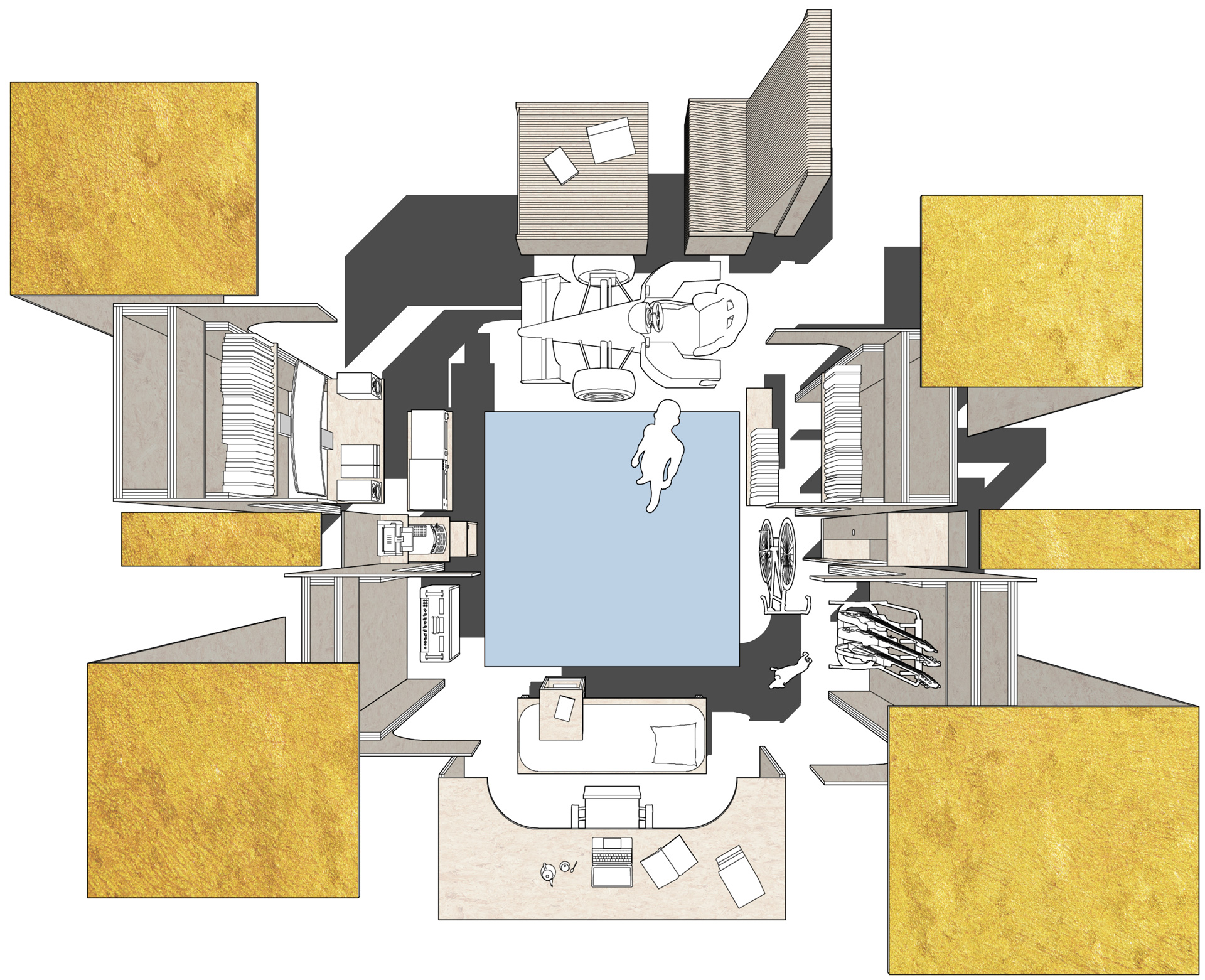
EASY AND INTUITIVE to build and use, this multipurpose structure provides the user with a space to use as they please, without the need for sophisticated voice recognition or a high-resolution touchscreen. In fact, it lets you shape your room by following your intention. Created with environmentally engineered OSB (Oriented Strand Board), this proposal extends OSB’s use to include structuring and furnishing, well beyond its typical application for sheathing.

FACILE ET INTUITIVE à construire et à utiliser, cette structure multitâche fournit simplement un espace pour faire ce que vous voulez, sans reconnaissance vocale sophistiquée ni écran tactile haute résolution. En fait, elle vous permet de façonner votre pièce en fonction de votre intention. Réalisée avec l’OSB (panneau à copeaux orientés), écologique, la proposition étend son utilisation à la structuration et à l’ameublement, en plus de son application typique pour le revêtement.

©J-W.HWANG
Continue reading “Reengineered Room in London, UK”

Digital Painting: DMZ Railroad

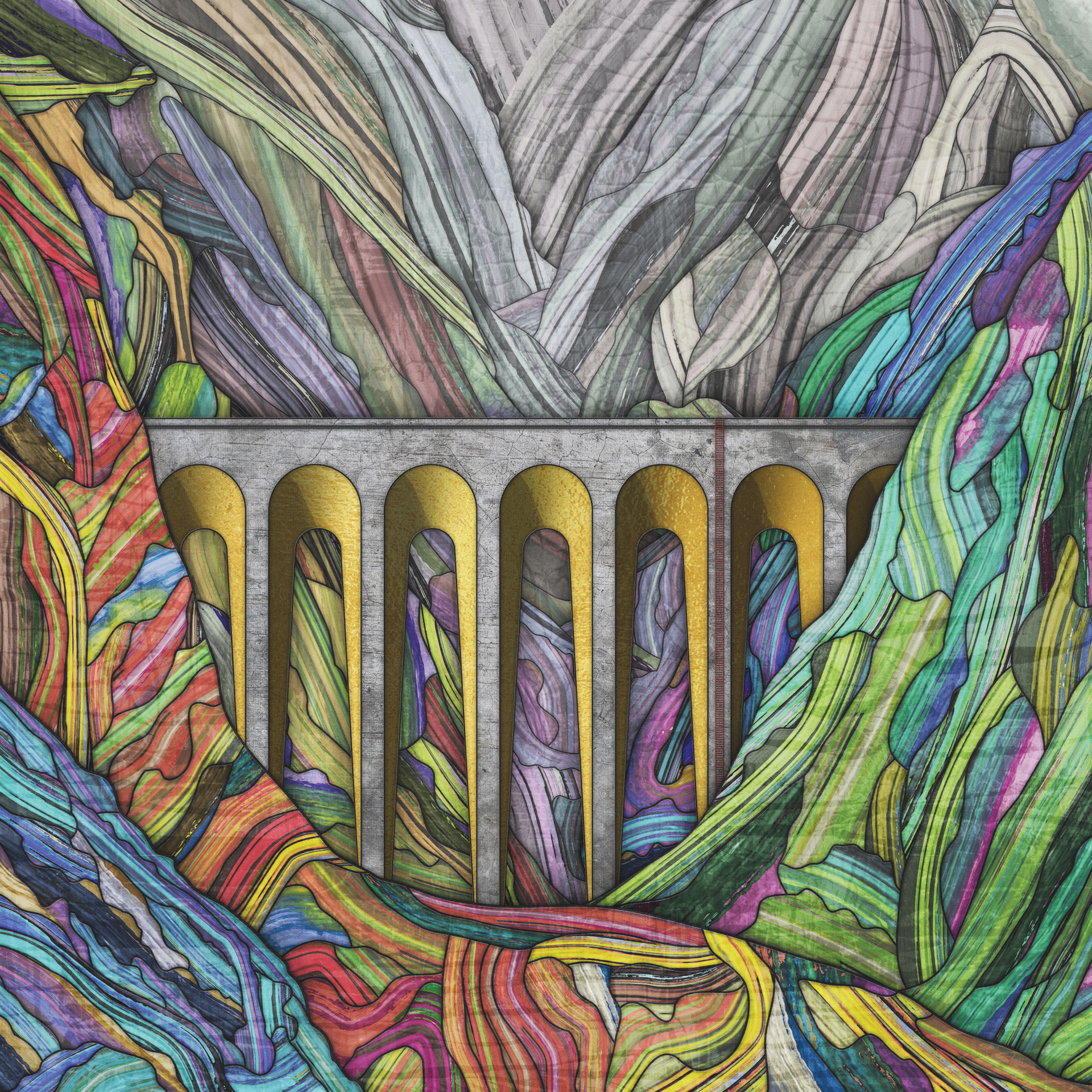
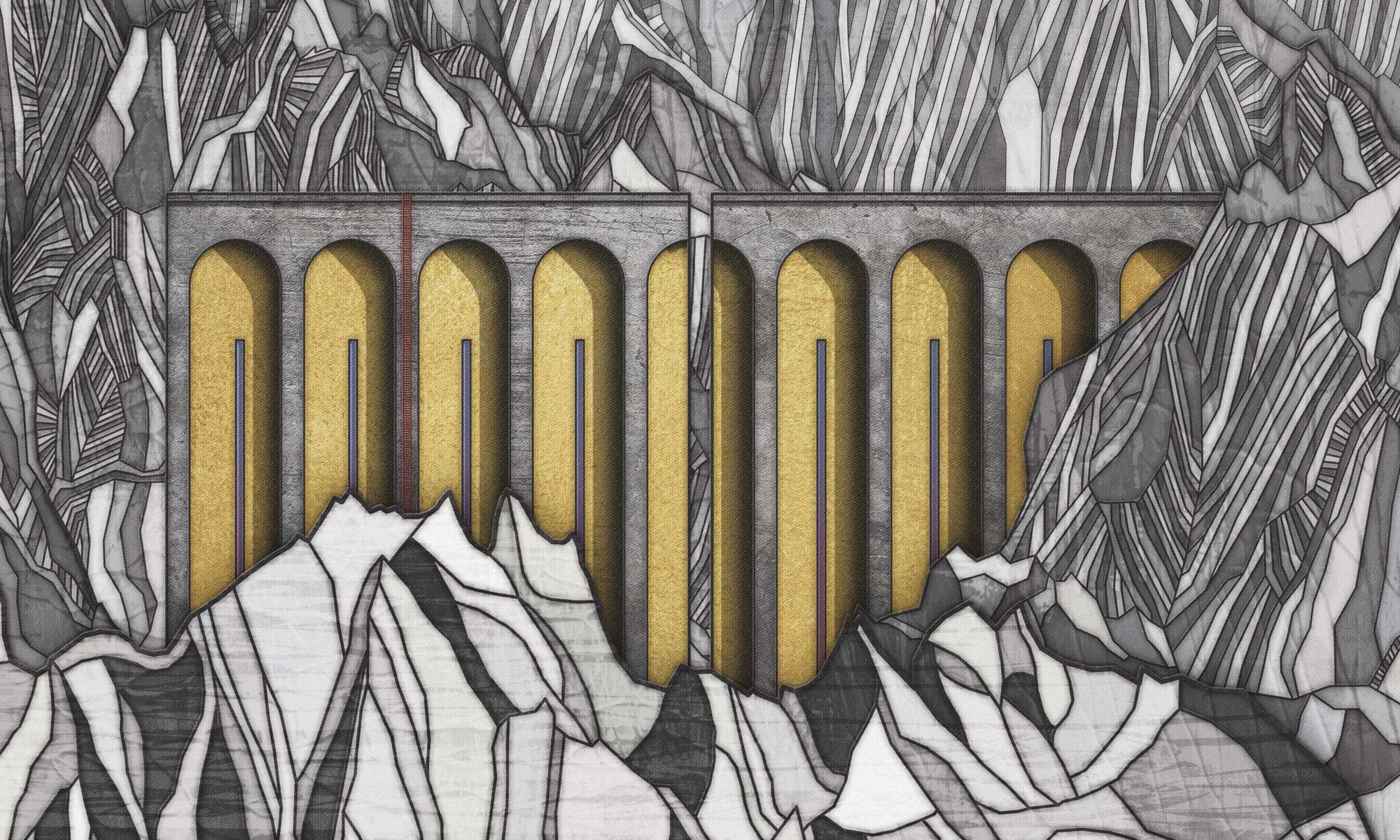
Designed to minimize the footprint without losing the solidity to take the excessive load of the high-speed trains, the gilded railroad bridge follows the sober contour of the previous proposal (the memorial). As a part of the project DMZ, the image takes the similar configuration. Picturesque mountains lead the visual composition; the bridge of the traditional exposure comes to the center where the seasonal hue of the background disappears. 

©J-W.HWANG

As an immature aspiration, the proposal includes the future. In the middle of the waves of brush strokes, uncovering the transition from the achromatic distant view to the delightful close front, as from the forbidden area to the lively land and as from the past of the DMZ to the future, the railroad bridge presents an irregular layout to create a silent hopefulness.

Creative Commons License

Digital Painting: DMZ Memorial

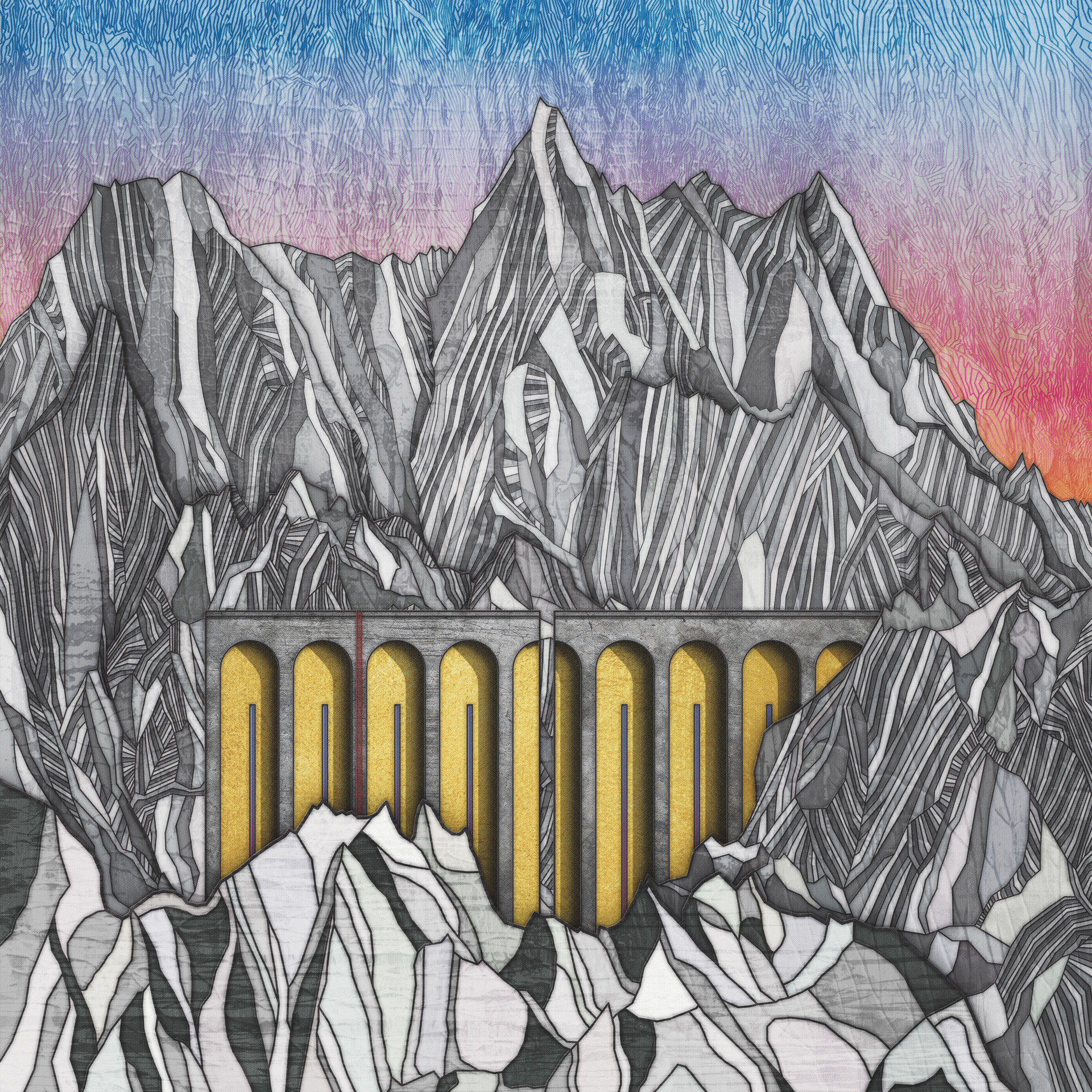
Peacefully mist-shrouded, the mountains draw boundaries to the both sides; the tension merges into the innocent landscape. The DMZ (Demilitarized Zone) of the Korean Peninsula was born from the war that never ends, leaving its nature as it was. Reunion or recurrence, while its future is unpredictable, the proposal for a memorial focuses on the message of the history.

©J-W.HWANG

The memorial is simply a thick and tall gilded wall shaped in solemn language, including a narrow passage and temporary use as an exhibition area. However, the leading actor of the image is the environment which is fairly pictorial, instead of the memorial that is materialized in strictly conventional expression. The composition emphasizes the contrast between the nature and the artificial, creating an emotional torsion by reminding the uninhabitable land and the human fault.

A simple painting could call an unexpected feeling when its covered message appears through that kind of antithesis. The image of the memorial exposes a narrative, not to celebrate or encourage, but to remember and transfer the message from the harsh reality; that’s the potential of the image and the power of the suggestion.

Creative Commons License

SynchroniCITY in Bergen, Norway

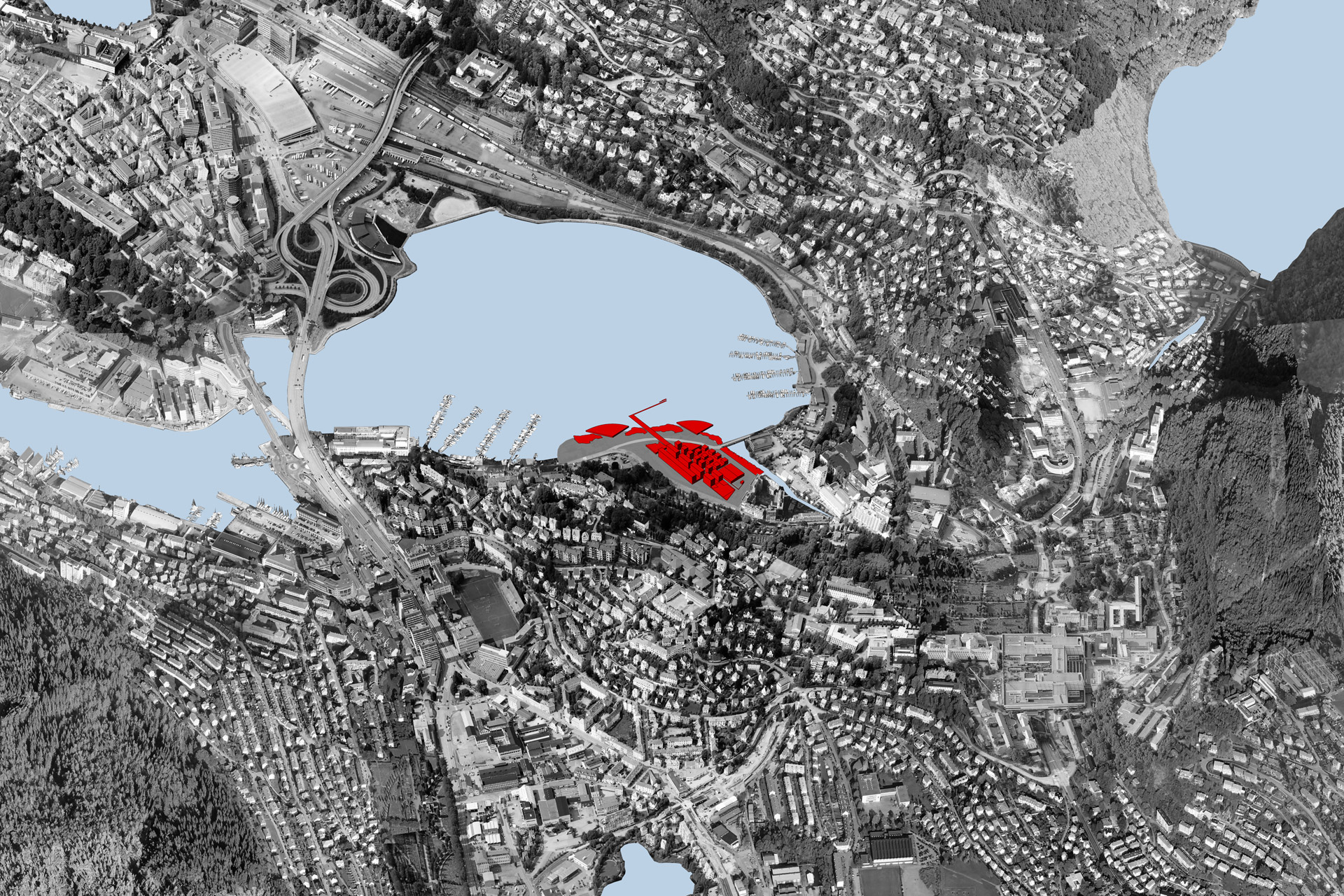
Urban layout (©J-W.HWANG)

THE PROJECT has proposed the redevelopment of an area currently occupied by the waste disposal facility by enhancing the site’s characteristic urban configuration: the inner coastline of the city. The body of the proposal is comprised of three sectors, from north to south, according to their technical, public, and residential uses. Featuring small shops and workshops on the ground floor of the buildings, the area’s design creates lively alleys inspired by Bryggen, the city’s UNESCO World Heritage Site.

LE PROJET propose de réaménager une zone actuellement occupée par une installation destinée au traitement des déchets, en mettant en valeur la configuration urbaine caractéristique du site, le littoral intérieur de la ville. Le corps de la proposition est composé de trois secteurs du nord au sud en fonction des usages : technique, public et résidentiel. Avec de petites boutiques et ateliers au rez-de-chaussée, les bâtiments créent des venelles vives inspirées de Bryggen, le site du patrimoine mondial de l’UNESCO de la ville.

Continue reading “SynchroniCITY in Bergen, Norway”