Filharmonia im. Mieczysława Karłowicza w Szczecinie

Five buildings and Italo Calvino’s “Six Memos for the Next Millennium” (4, revised)

Visibility: Filharmonia im. Mieczysława Karłowicza w Szczecinie, Szczecinie, Poland

The Philharmonie de Paris has finally opened its doors. Around the project, which costs more than doubled the initial budget, the conflict among the stakeholders has been constantly reported. Obviously, it should be unreasonable to ignore the administrative and political influence for such a large-scale operation; however, disregarding the circumstantial issues, this exceptional edifice could open the path to see what visibility means to the architectural works.
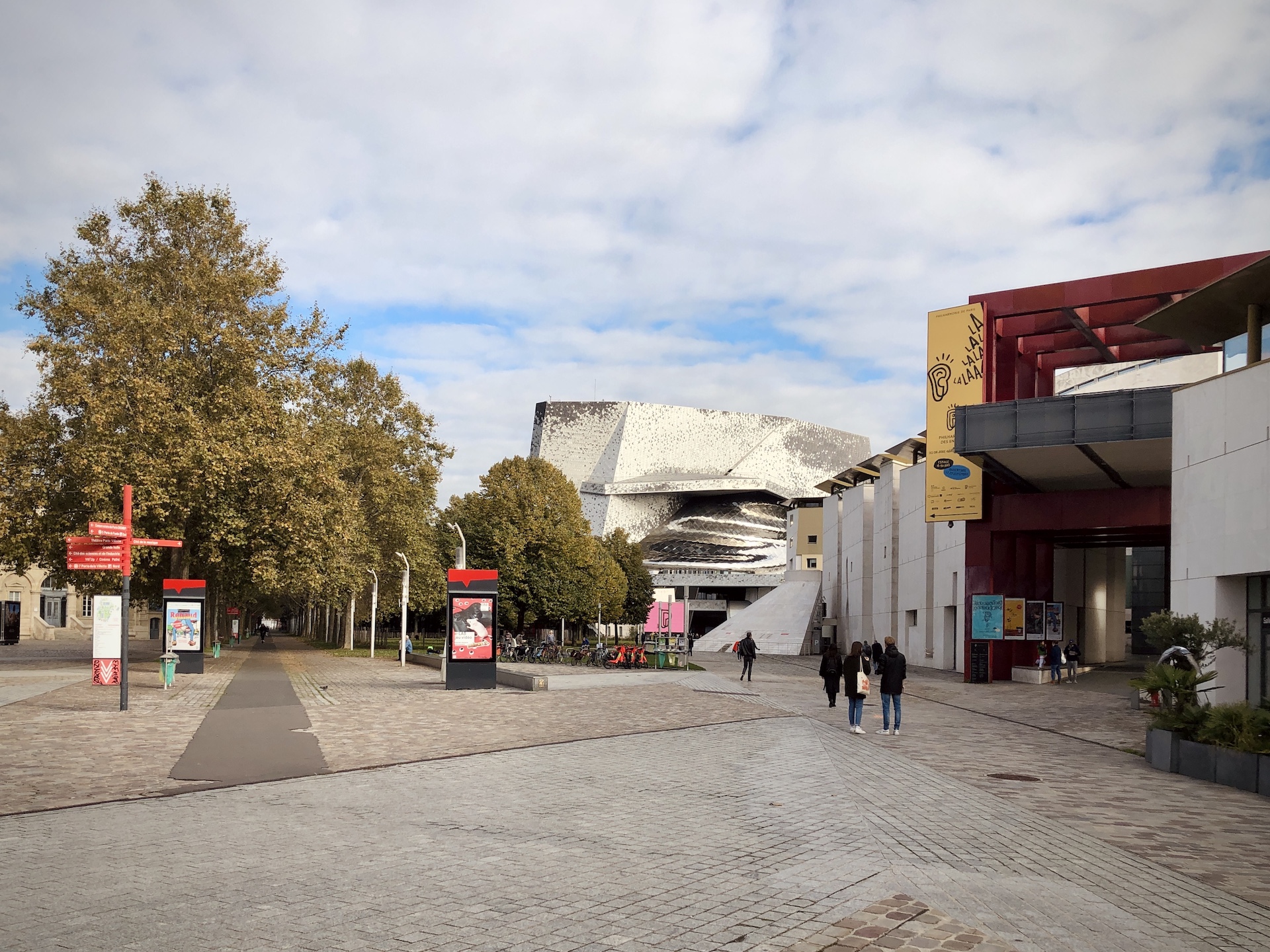
Philharmonie de Paris ©J-W.HWANG

The mass comes in a totally abstract shape; that appears to be somewhat necessary in order to keep the identity within the vivid surroundings of the aligned red pavilions of the Parc de la Vilette and the extravagant former concert hall. Contrary to the splendor, the building itself voices quietly. The enveloping shiny texture resembles the skin of a coiled snake, and the cladding pattern on the walls and the roof glitters like the flying birds; through that luxurious appearance, the signs of the site are barely seen.

Continue reading “Filharmonia im. Mieczysława Karłowicza w Szczecinie”
Zweiter traversiner steg

Five buildings and Italo Calvino’s “Six Memos for the Next Millennium” (3, revised)

Exactitude: Zweiter traversiner steg, Viamala, Switzerland

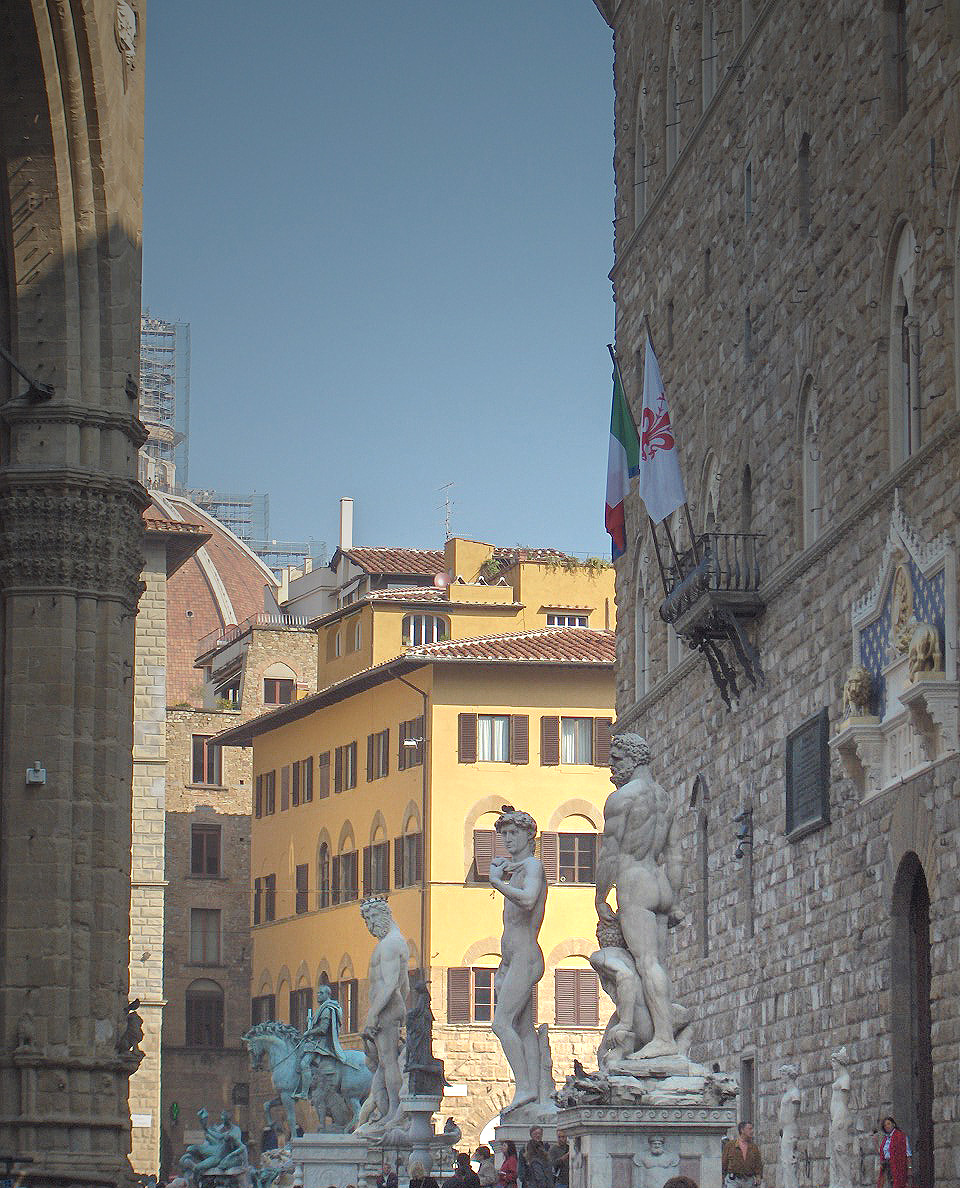
Statues of the Palazzo Vecchio (source: wikipedia.org)

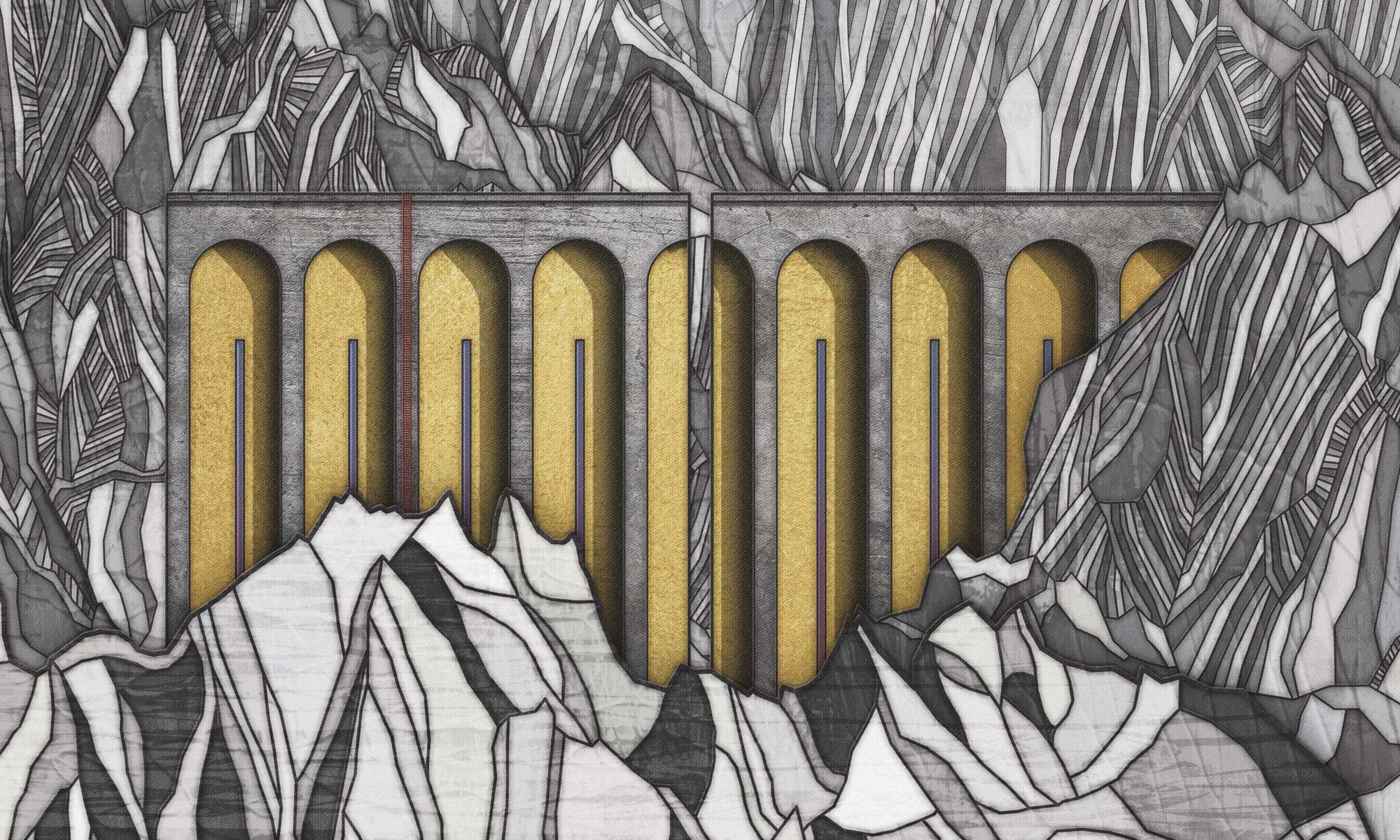
David, the statue that Michelangelo had intended to place on the roof of the Cattedrale di Santa Maria del Fiore finally laid before the Palazzo Vecchio, the then city hall of Florence. David has thereby been revalued not only as a splendid sculpture, but also as a testimony of the era. The work of art is experienced differently depending on where and how it stands; many creators didn’t hide their anxieties and persistence about locating their achievements. This preoccupation often influences even after the creator’s passing. Sir Nicholas Andrew Serota, director of the Tate art museums and galleries, wrote in the media guide for the exhibition of Donald Judd;

… he made very simple decisions about the way in which the spaces were organized and then progressively installed his own works in forms that were satisfying to him, sometimes it took years to get the right combination, and, of course, in making the installation of this show we had about two weeks rather than several years but what we’ve tried to do in the exhibition was to reflect some of the principles that Judd himself adopted in organizing the spaces in the first place and then in the way in which works are installed in particular spaces.

Continue reading “Zweiter traversiner steg”

Moritzkirche

Five buildings and Italo Calvino’s “Six Memos for the Next Millennium” (2, revised)

Quickness: Moritzkirche, Augsburg, Germany

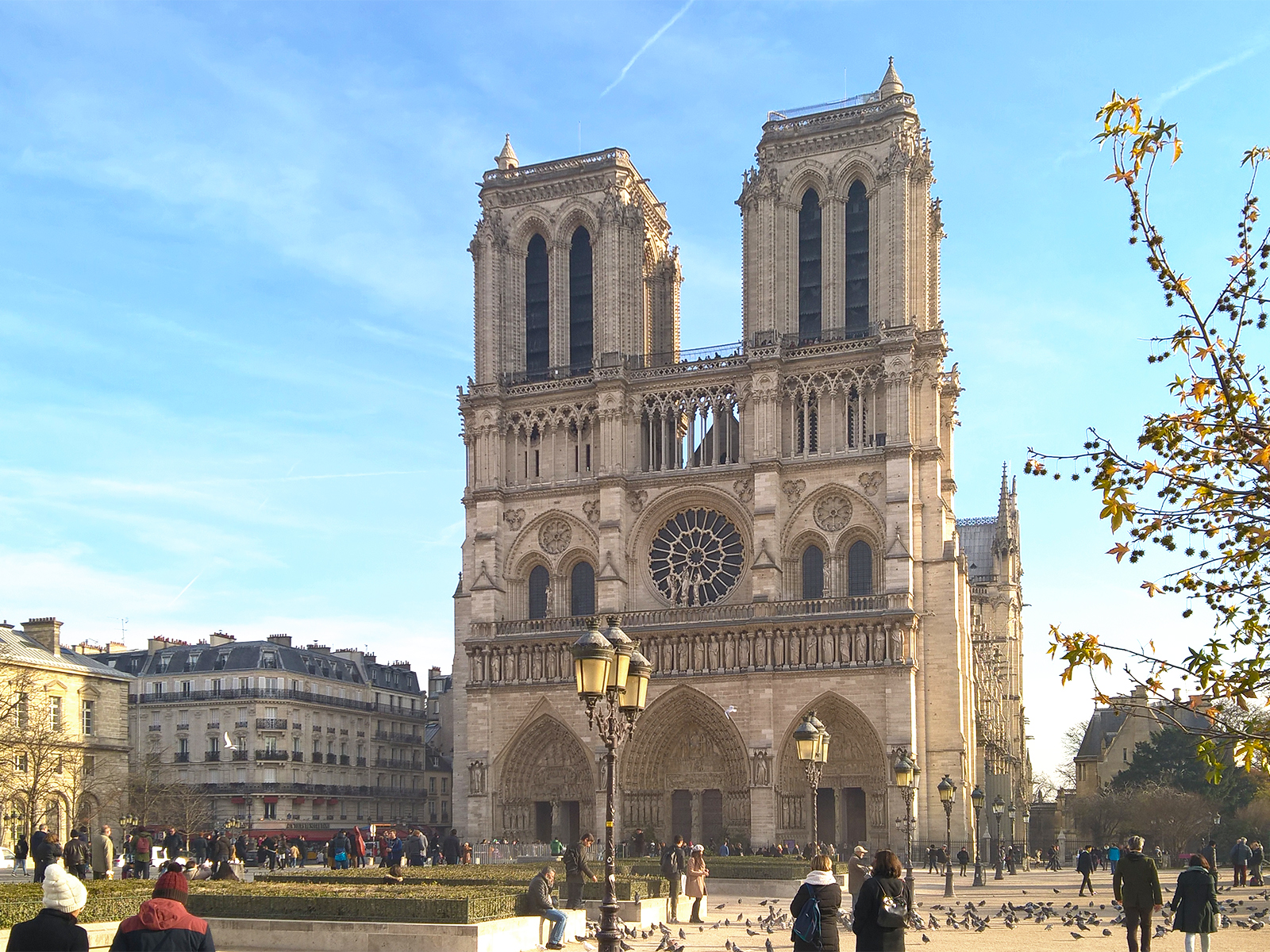
This will kill that, the book will kill the edifice; says the Archbishop pointing at a printed book*. This is a scene from “Notre-Dame de Paris”, a novel written by Victor Hugo during the turbulent period after the July Revolution of France in 1830. The scene is so significant that the author takes up a considerable number of pages to carry on with his own argument. The assertion about architecture and typography is an interesting part of the novel with the detailed description of the Gothic cathedral at the introductory chapter overlapping him with the background of the story; his life in the world of chained revolutions parallels the church in a sudden innovation.

Notre-Dame de Paris (©J-W.HWANG)

Victor Hugo reportedly didn’t hide his anger toward the imprudent demolition of the old buildings and the disorderly reconstruction in a destructive manner; accordingly, his argument proves his profound perception about history and architecture. Through various metaphors, he says that the mankind has engraved the legacy within the edifices and has conveyed those achievements to the following generation; then he declares that the role of architecture will be replaced by the publication unleashed by the invention of type printing.

Continue reading “Moritzkirche”

Anthony Browell Magney House

Five buildings and Italo Calvino’s “Six Memos for the Next Millennium” (1, revised)

Lightness: Anthony Browell Magney House, New South Wales, Australia

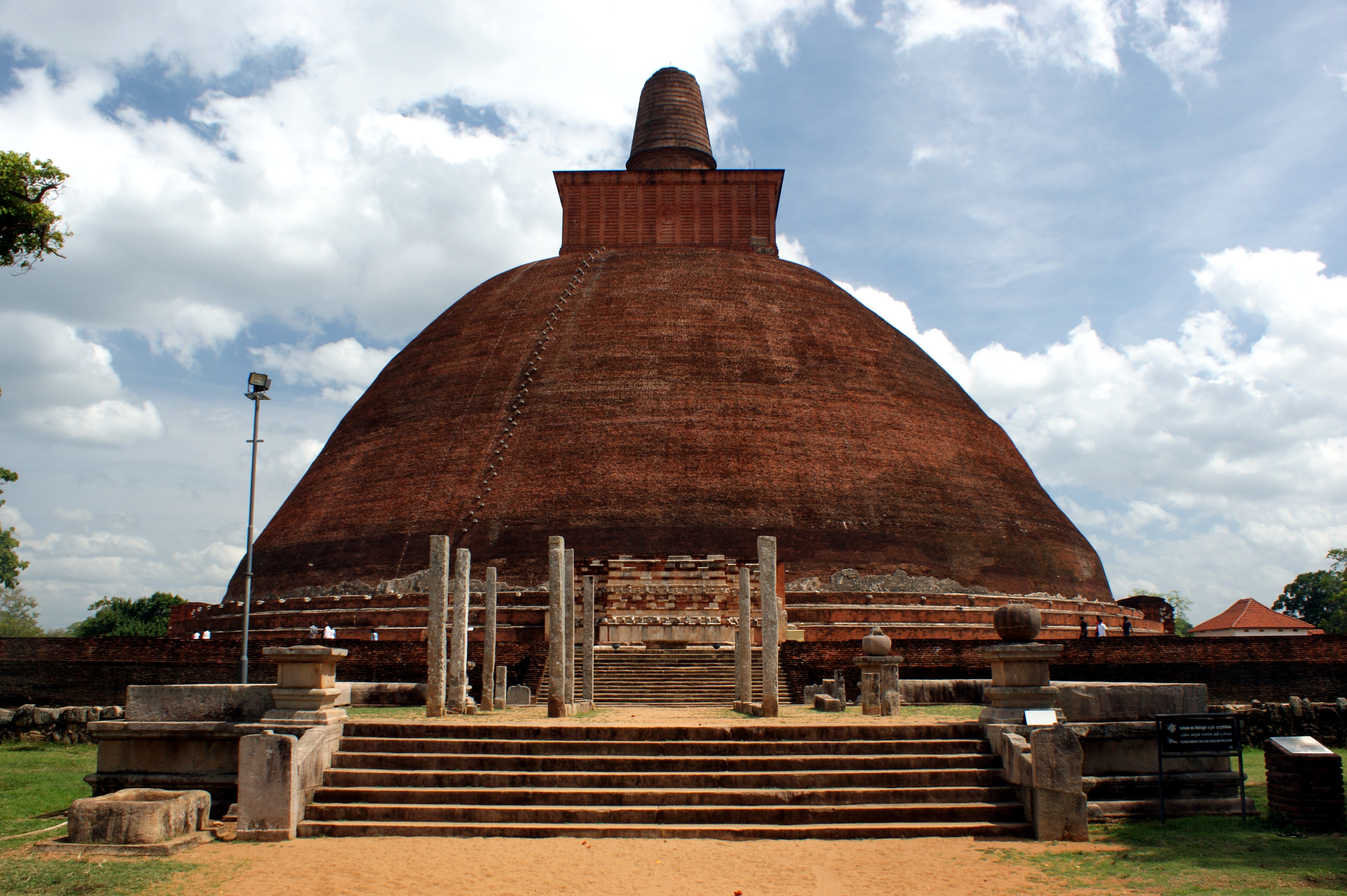
While the mud is nothing more than a bunch of sodden dust, the land as its origin is a full gravity. The dried clay turns into the hardened cuboid, with which people achieved a 122 m tall stupa Jetavanaramaya in Sri Lanka 1700 years ago. Familiarized for its commonplace raw resources, convenient manufacturing process and straightforward building method, the brick is one of the oldest construction materials of human history.

Jetavanaramaya, Anuradhapura, Sri Lanka (source: wikipedia.org):  approx. 93.3 million bricks were used

The story of the three little pigs reveals why; their other houses made of straws and sticks are blown away by the simple breath to demonstrate that solidity and durability are crucial for the construction material. In reality, numerous ancient monuments preserved today are mostly made of elements proved for these conditions. Aula Palatina, as known as the Basilica of Constantine, was built with fired bricks around AD 310; in the Colosseum of Rome completed in AD 80, we can easily find the traces of brick arches.

Continue reading “Anthony Browell Magney House”

Développement durable pour la ville durable

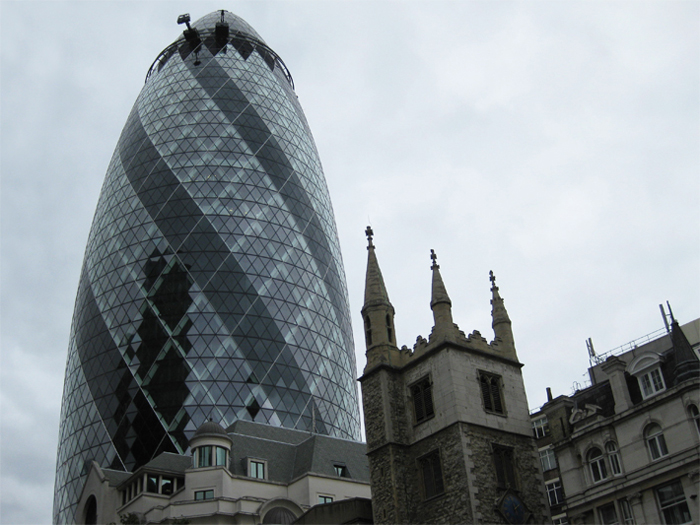
Le siège social de Swiss Re à Londres, projeté par Foster+Partners (©J-W.HWANG)

Terrain de jeu

Le calcul thermique exigeant, la végétation abondante, les matériaux légers et recyclables, aujourd’hui, il n’y a rien d’exceptionnel dans la démarche du développement durable ; autrement dit, ce terme se clarifie difficilement, car le développement durable n’est pas une méthodologie, mais plutôt une attitude politique. À l’origine, l’intention du développement durable est de faire un design sensible et qualifié pour éliminer complètement l’impact environnemental négatif*. C’est donc un geste contre tout ce que nous avons fait jusqu’à aujourd’hui ; c’est donc une correction sévère des erreurs que l’humanité a commises.

Continue reading “Développement durable pour la ville durable”